



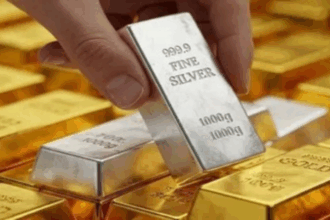
On Monday, December 29, 2025, gold and silver prices fell sharply after reaching record highs last week. Gold dropped over 4% to about $4,355 per ounce, and silver fell almost 9%, going down to just over $73 per ounce. Other metals like platinum and palladium also saw big losses. This sharp fall came after gold hit $4,565 on Friday and silver rose above $84 on Sunday.
The immediate trigger for the sell-off was the Chicago Mercantile Exchange (CME Group) raising margin requirements for gold and silver futures. Margin requirements represent the amount traders must deposit to maintain positions in the futures market. A sudden increase in margins forces traders to either inject additional capital or exit positions, often triggering a cascade of selling. This technical adjustment amplified the sharp price correction in both gold and silver.
The correction followed an extraordinary rally in 2025. Gold gained approximately 65% year-to-date, while silver surged roughly 150%, marking some of the strongest annual gains for both metals in decades. Safe-haven demand, concerns over inflation and real interest rates, a weakening U.S. dollar, and industrial demand for silver, particularly in electronics and renewable energy sectors, drove the rally. Investors had flocked to precious metals as a hedge against geopolitical uncertainty and global economic volatility, including fears surrounding Ukraine-Russia tensions.
Profit-taking also played a role in the sharp decline. After unprecedented gains, investors realized profits, especially in light of higher CME margin requirements. Analysts emphasize that such pullbacks are typical following rapid price surges and should not be seen as a reversal of the long-term bullish trend in precious metals. Temporary volatility and technical corrections often occur after record-setting rallies, allowing markets to consolidate.
Additionally, geopolitical developments influenced trading sentiment. Reports of potential de-escalation in the Ukraine-Russia conflict, including discussions involving former U.S. President Donald Trump and Ukraine’s leadership, reduced the immediate safe-haven appeal of gold and silver. Investors responded by adjusting positions, contributing to the sharp fall in prices.
Despite Monday’s plunge, both gold and silver remain significantly higher than the beginning of 2025, reflecting the metals’ strong performance and sustained investor interest. Precious metals continue to attract capital amid ongoing economic uncertainty, inflationary pressures, currency fluctuations, and industrial demand trends.