



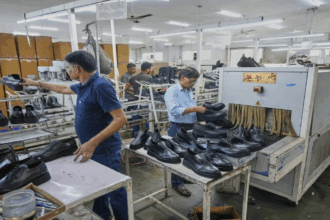
India is considering a relief package of around $1 billion, roughly ₹8,300 to ₹8,500 crore, to support its footwear manufacturing industry. The move comes after the United States imposed steep tariffs of nearly 50% on several Indian exports, including leather and footwear products. These high duties have sharply increased the cost of Indian footwear in overseas markets, especially in the US, making them less competitive against products from countries like Vietnam, China, and Indonesia. As a result, Indian exporters are facing falling orders and pressure on profit margins.
The footwear industry is one of India’s most labour-intensive manufacturing sectors. It provides employment to large numbers of workers, especially in states such as Uttar Pradesh, Tamil Nadu, Rajasthan, and West Bengal. Any slowdown in this sector directly affects jobs, small factories, and local economies. With tariffs raising export prices, many manufacturers fear losing long-standing buyers and market share in key global markets. This has prompted the government to explore ways to cushion the impact and restore confidence in the sector.
According to reports, the proposed relief package could include a mix of fiscal support, tax incentives, and policy measures. One of the key ideas under discussion is reducing the Goods and Services Tax on footwear manufacturing and exports. A GST reduction would lower production costs and help exporters price their products more competitively. Other forms of support may include direct incentives for exporters, easier access to credit, and assistance for upgrading manufacturing facilities. The goal is to ensure Indian footwear remains attractive in international markets despite the tariff shock.
The US tariff action combines an existing 25% duty with an additional 25% penalty, creating a heavy cost burden on Indian exporters. This sudden jump has disrupted supply chains and forced buyers to explore alternative sourcing destinations. Without timely support, Indian footwear makers risk losing long-term contracts and being replaced by competitors from tariff-advantaged nations. That is why the government is now stepping in to prevent long-term damage to the industry.
Beyond exports, the policy intent is also to protect domestic production capacity. If factories cut output due to falling orders, thousands of workers could face reduced income or job losses. Supporting the sector now is seen as critical to maintaining manufacturing momentum and preserving India’s reputation as a reliable sourcing destination for global footwear brands.
The proposed package also signals that India is willing to act quickly to counter external trade shocks. Labour-intensive sectors such as footwear, textiles, and leather goods are especially sensitive to global tariff changes. By offering relief, the government aims to keep these sectors stable while also exploring long-term strategies for market diversification beyond the US.
In simple terms, US tariffs have made Indian footwear expensive overseas. To prevent export losses and job cuts, India is preparing a large relief package that may include GST cuts and incentives. If approved, this support could help the footwear industry stay competitive, protect employment, and keep India’s export engine running despite rising global trade tensions.