


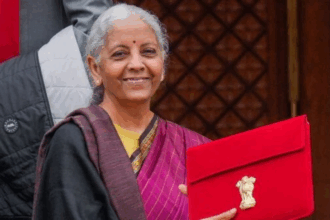
The Union Budget 2026-27, presented by Finance Minister Nirmala Sitharaman, emphasizes growth, infrastructure, and inclusive development while maintaining fiscal discipline. The fiscal deficit for FY27 is projected at 4.3% of GDP, slightly lower than FY26’s 4.4%, indicating a careful balance between spending and consolidation. One of the most striking features of the budget is the capital expenditure (Capex) push, which has increased to ₹12.22 lakh crore, up from ₹11.2 lakh crore in the current year. This signals the government’s commitment to driving growth through large-scale infrastructure projects, job creation, and modernizing the economy.
The Budget frames its priorities around three core “kartavya” or duties: accelerating growth, building capabilities, and promoting inclusive development. This holistic approach combines economic expansion, structural reform and social upliftment. Businesses and trade bodies across sectors, including manufacturing, FMCG, agriculture, and infrastructure, have largely welcomed the Budget’s focus on domestic manufacturing, supply chain strengthening and rural and MSME support. Dividend expectations from the RBI, public sector banks, and financial institutions are projected at ₹3.16 lakh crore, slightly higher than the current year, reflecting a moderate increase in government non-tax revenue.
Several innovative initiatives stand out in Budget 2026. The government plans to develop 15 archaeological and cultural sites, including Lothal and Leh Palace, into vibrant tourism destinations. A National Destination Digital Knowledge Grid will digitally document cultural, spiritual, and historical assets. In education, a new Education-to-Employment Standing Committee will align learning outcomes with market needs, addressing the skills gap. In agriculture, the launch of Bharat-VISTAAR, a multilingual AI tool, will integrate agricultural data and provide personalized advisory support to farmers. For transportation, the Railways capital spend reaches ₹2.77 lakh crore, the highest ever, covering infrastructure expansion and asset acquisition.
Ministry-wise allocations show strategic priorities: The Ministry of Finance leads with ₹19.72 lakh crore, covering interest payments, subsidies, and transfers to states. Defence receives ₹7.85 lakh crore, focusing on modernization, pensions, and indigenization. Road Transport & Highways gets ₹3.10 lakh crore, and Railways is allocated ₹2.81 lakh crore, emphasizing capital-heavy infrastructure projects. Social development sectors also receive strong support: Health and Family Welfare at ₹1.07 lakh crore, Education at ₹1.39 lakh crore, and Rural Development at ₹1.97 lakh crore. Energy, digital infrastructure, commerce, and skill development sectors also see targeted funding, reflecting a balanced approach to economic growth and human capital development.
The allocation patterns suggest a forward-looking and growth-oriented Budget, balancing infrastructure expansion, social development, and fiscal prudence. High capital spending, combined with strategic support for Defence, roads, railways, and digital initiatives, is expected to boost investor confidence, support domestic manufacturing, and create jobs across sectors. Programs like Bharat-VISTAAR and education-employment alignment indicate an effort to integrate technology and skill development with economic planning. Overall, Budget 2026-27 projects a roadmap for sustained economic growth, social inclusion, and long-term competitiveness, while maintaining fiscal discipline in the post-pandemic recovery phase.