
Written By: Nishant Parsad
To interpret negative working capital effectively, it’s essential to identify its root cause. The circumstances leading to negative working capital determine whether it reflects operational strength or financial distress.
Negative working capital caused by poor financial management often comes with other warning signs. Take the example of Jet Airways, once one of India’s leading airlines, despite operating in the cash-generating aviation industry, the company’s inability to manage its liabilities and operational expenses led to its downfall in 2019.
In such cases, negative working capital indicates financial instability, especially if:
- Short-term debt grows significantly.
- Projects face delays or budget overruns.
- Cash flow from operations (CFO) is insufficient to cover obligations.
Let’s understand the whole case study of Jet Airways
How Jet Airways Operated with Negative Working Capital
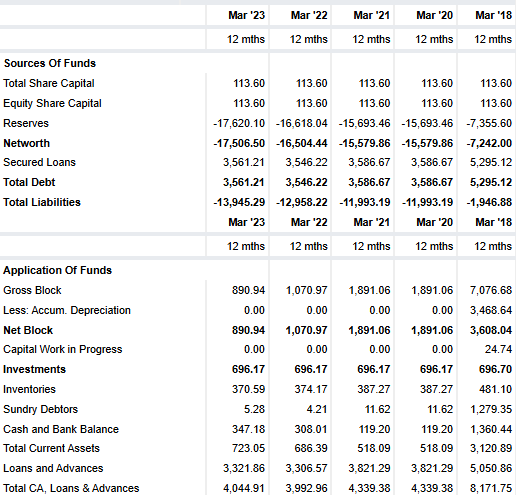
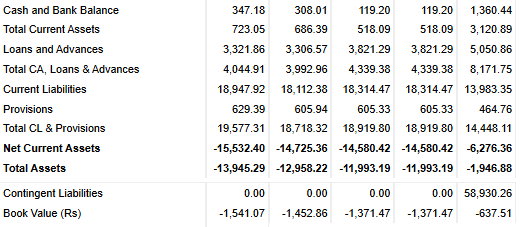
The airline’s liabilities, including lease payments and fuel costs, far outpaced its current assets. By FY2018:
- Current Liabilities: ₹13,983.35 crore (All Time-High)
- Current Assets: ₹3,120.89 crore (Started decreasing)
- Working Capital: -₹10,862 crore
This imbalance reflected liquidity challenges rather than operational strength.
Warning Signs of Financial Stress
- Mounting Debt:
- Total debt reached ₹5,295.12 crore by FY2018, with high interest costs straining cash flows.
- Delayed Vendor Payments:
- Overdue payments to lessors and suppliers led to grounded aircraft and strained vendor relations.
- Weak Cash Flow from Operations (CFO):
- Net CFO turned negative in FY2020 due to rising costs and declining profitability.
- Declining Market Share:
- Competition from low-cost carriers like IndiGo and high fixed costs eroded margins.
Consequences of Poor Working Capital Management
- Operational Disruptions: Grounded aircraft and delayed flights.
- Employee Unrest: Unpaid salaries led to strikes.
- Default and Bankruptcy: Jet Airways ceased operations in April 2019 after defaulting on debt repayments.
Comparative Analysis
Unlike IndiGo, which also operates with negative working capital but maintains strong cash flows and low debt, Jet Airways relied on excessive borrowing and struggled with profitability.
Key Takeaways:
Jet Airways’ case highlights that negative working capital paired with:
- Rising short-term debt,
- Insufficient CFO, and
- Persistent payment delays
...is a clear sign of financial instability. For investors, these red flags emphasize the need for caution when assessing companies with negative working capital.
Negative Working Capital as an Efficiency
On the other hand, in industries like retail or FMCG, negative working capital reflects strategic supplier arrangements and efficient cash flow management. For example, Ion Exchange (India) Ltd has consistently leveraged supplier credit to maintain operations and fund growth. From FY2010-19, Ion Exchange increased trade payables by ₹227 crore, allowing it to reinvest surplus cash into its business.
Such cases demonstrate that negative working capital can be a strength when combined with:
- High inventory turnover.
- Strong profit conversion to cash flow.
- Low reliance on short-term debt.
Let’s talk about the Ion Exchange (India) Ltd in detail for more clarity,
Ion Exchange (India) Ltd, a leader in water treatment and desalination, demonstrates how negative working capital can signify operational efficiency rather than financial distress. Despite current liabilities consistently exceeding current assets, the company has maintained financial health and sustained growth.
How Ion Exchange Operates with Negative Working Capital
The company strategically leverages favorable supplier credit terms, receiving upfront payments for projects while extending payment periods to suppliers. This creates a cash surplus, enabling operations without liquidity concerns.
From FY2010 to FY2019:
- Trade Payables: Increased by ₹227 crore, from ₹188 crore to ₹415 crore.
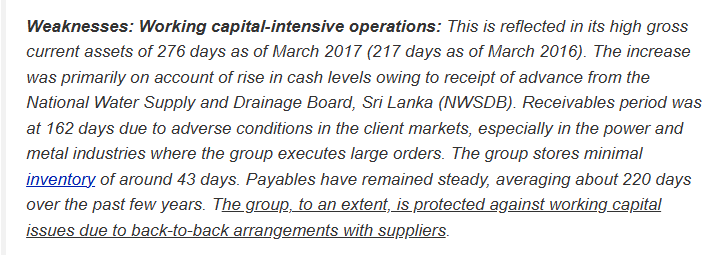
- Receivable Days: Peaked at 162 days in FY2017 due to client market delays.
- Payable Days: Averaged 220 days, reflecting strong supplier terms.
Supplier credit has been pivotal in offsetting the high receivables and cash-intensive projects.
The credit rating agency, CRISIL, in its credit rating report of the company in Aug. 2017 has highlighted that Ion Exchange (India) Ltd is able to control its working capital despite high receivables days because it is able to get back-to-back arrangements from its suppliers.
Financial Strength Indicators (FY2010–FY2019)
- Cash Flow from Operations (CFO): ₹616 crore, exceeding PAT of ₹202 crore, showing strong profit-to-cash conversion.
- Free Cash Flow (FCF): Positive at ₹404 crore after ₹212 crore in capex.
- Debt-to-Equity Ratio: Incremental debt was just ₹51 crore, showcasing low reliance on borrowing.
- Cash Reserves: Grew by ₹273 crore, ensuring financial flexibility.
Supplier Arrangements & Challenges
CRISIL (2017) credited Ion Exchange's ability to control its working capital cycle by ensuring payables exceeded receivables. However, constraints remain:
- Blocked Cash Reserves: ₹158 crore in escrow accounts tied to large projects like the NWSDB in Sri Lanka.
- Working Capital Intensity: High gross current assets (276 days in FY2017) due to delayed payments, particularly in power and metal industries.
Conclusion
Ion Exchange’s negative working capital reflects financial prudence, driven by efficient supplier credit management, strong cash flow generation, and low debt levels. For investors, it underscores the importance of analyzing CFO, FCF, and payables terms to differentiate efficiency from distress. Ion Exchange turns liabilities into a strategic advantage, funding growth without relying heavily on debt.
Industries where Negative Working Capital is Normal
Negative working capital isn’t always a red flag. In some industries, it’s a natural outcome of their operating models.
1. Retail and E-commerce
Retailers like DMart and global giants like Walmart operate on low-margin, high-turnover models. Customers pay at checkout, providing immediate cash inflow, while suppliers often offer extended credit terms (e.g., 30-60 days). This creates a situation where liabilities (supplier payables) exceed assets (inventory and cash).


Comments
Log in to comment and join the discussion.
No comments yet. Be the first to comment.