
Research By: Tushar Nischal
Bonds
A bond is a financial instrument representing a loan from an investor to an issuer, such as a corporation or government. When an investor buys a bond, they are essentially lending money to the issuer in exchange for periodic interest payments and the return of the principal amount at maturity. Bonds have a fixed interest rate, known as the coupon rate, and a set maturity date when the principal is repaid. They are often used by entities to raise capital and provide investors with a predictable income stream, typically making them a lower-risk investment compared to stocks.
Convertible Bonds
Convertible bonds offer a fascinating mix of features, combining the stability of traditional bonds with the exciting potential of stocks. They are corporate debt securities that not only pay regular interest but also give investors the option to convert their bonds into shares of the company’s stock. This hybrid nature makes convertible bonds an appealing choice for many investors.
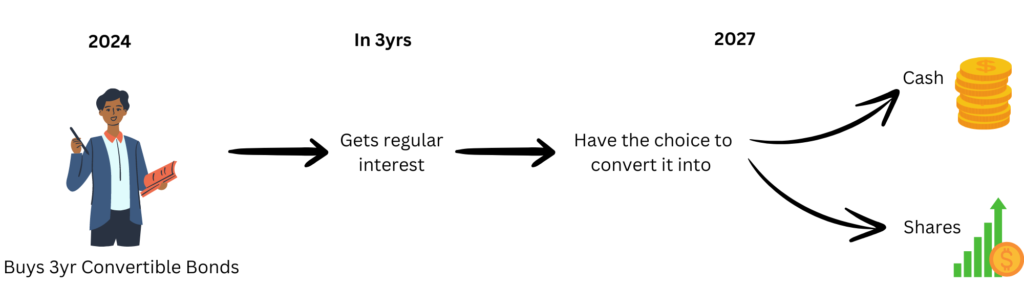
How Convertible Bonds Work
Convertible bonds provide investors with flexibility. They can choose to convert their bonds into shares at the predetermined conversion price or hold the bond until maturity to receive interest payments and the principal amount. The conversion ratio specifies how many shares are received per bond, offering a potential reward if the company's stock price increases.
Convertible bonds blend the best of both worlds—offering the safety of fixed interest payments and the potential for equity upside. While they come with their own set of advantages and challenges, they can be a valuable addition to an investment portfolio.
What Makes Convertible Bonds Unique?
1. The Conversion Option
The standout feature of convertible bonds is the conversion option. This allows bondholders to swap their bonds for a predetermined number of shares in the issuing company. For instance, if a bondholder has a bond with a conversion ratio of 20:1, they can convert one bond into 20 shares of the company's stock. This feature becomes particularly valuable if the company’s stock price increases significantly, offering investors a chance to profit from the rise in share value.
2. Regular Interest Payments
Convertible bonds pay interest just like other bonds. However, because they offer the potential for conversion into equity, their coupon rates are often lower than those of non-convertible bonds. For example, while a traditional bond might offer a 6% annual interest rate, a convertible bond might offer only 4%. This trade-off is the price investors pay for the opportunity to convert their bonds into shares.
3. Maturity Date
Like traditional bonds, convertible bonds have a fixed maturity date. This is the date when the issuer must repay the bond’s face value if the bondholder has not chosen to convert it into stock. If the bondholder decides not to convert, they will receive their initial investment back at maturity. Convertible bonds typically have maturity periods ranging from 5 to 10 years.
4. Conversion Ratio and Price
The conversion ratio is a key aspect of convertible bonds. It determines how many shares a bondholder will receive upon conversion. For example, a ratio of 20:1 means that each bond can be converted into 20 shares of stock. The conversion price is the price per share at which the conversion happens. It's usually set above the current market price of the stock to encourage investors to convert only when the stock price rises.
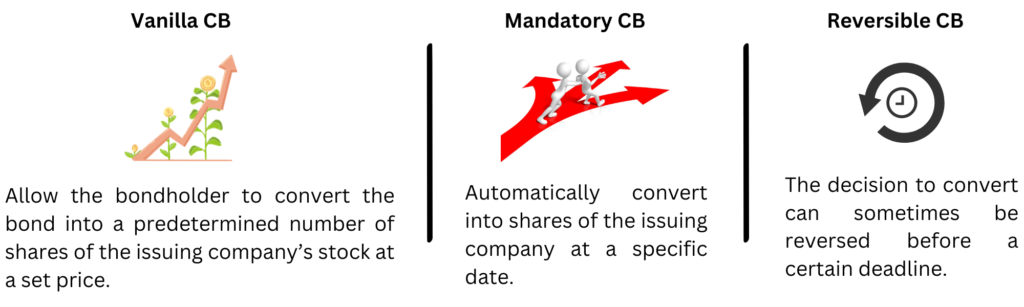
5. Additional Features: Call and Put Options


Comments
Log in to comment and join the discussion.
No comments yet. Be the first to comment.