





Written By: Ishwar Singh
In financial markets, the word “debt” often triggers alarm bells. Many investors instinctively associate debt with distressed companies, looming defaults, or fragile balance sheets. The prevailing belief is simple: debt equals danger. But is that really the case?
Debt is not inherently bad. In fact, when used wisely, it can act as a powerful catalyst for business growth. It can unlock capital to scale operations, fund expansion into new markets, or accelerate innovation often without diluting shareholder ownership. However, when poorly managed or overextended, debt can cripple cash flows, strain operations, and expose a business to heightened financial risk, especially during downturns.
Understanding Debt: What Is Corporate Debt?
Corporate debt refers to the money a company borrows from external sources to finance its operations, expansion plans, or strategic goals. This borrowing can take several forms—bank loans, bonds (both secured and unsecured), commercial paper, convertible debentures, or syndicated loans involving multiple lenders. Each instrument has its own risk, tenure, and repayment terms. For example, commercial paper is typically used for short-term liquidity needs (7 days to 1 year), and as of FY24, India saw CP issuances of over ₹5 lakh Cr annually. Bonds and term loans, meanwhile, often support long-term projects like capacity expansion, R&D, or acquisitions.
Companies opt for debt to avoid diluting ownership through equity, especially when interest rates are favorable or internal cash flows are insufficient. Debt also offers tax advantages, as interest payments are tax-deductible. For instance, in India’s 25.17% tax bracket, every ₹1 Cr of interest expense reduces tax by ₹25.17 lakh. This lowers the real cost of borrowing and enhances post-tax profits.
However, debt introduces fixed obligations that can strain cash flows during downturns. Efficient use of debt can enhance returns on equity through leverage, but mismanagement or overleveraging can lead to financial distress, defaults, or loss of investor confidence.
The Advantages of Using Debt
1. Lower Cost of Capital & Tax Efficiency
Debt is generally a cheaper source of financing compared to equity. One major reason is the tax shield: interest payments reduce taxable income. For instance, in India’s corporate tax regime, a ₹1 Cr interest payment saves up to ₹25.17 lakh in taxes.
By contrast, dividends are not tax-deductible. This makes debt 2–4% cheaper than equity in real terms, and using debt lowers the company’s Weighted Average Cost of Capital (WACC) a key determinant of valuation and investment attractiveness.
2. Enhanced Financial Flexibility & Ownership Preservation
Debt allows companies to raise funds without giving up ownership or control. Unlike equity financing—where issuing new shares dilutes existing shareholders—debt keeps control with current owners. For example, Nykaa’s promoters retained over 50% control even during expansion by choosing structured debt over equity.
Debt instruments can be customized. Working capital overdrafts, revolving credit lines, and term loans can be structured with flexible repayment terms and tenures. Moreover, accessing debt is often quicker and more straightforward than raising equity, which involves regulatory hurdles and market sentiment.
Additionally, India’s emergency credit line (ECLGS) during COVID-19 disbursed over ₹3.9 lakh Cr to MSMEs, showing how debt can preserve ownership and provide rapid liquidity.
3. Improved Returns Through Leverage
One of the most powerful benefits of debt is financial leverage. If the return generated from a project or investment exceeds the interest cost on borrowed capital, the excess return flows to equity holders. For example, if a firm borrows at 8% and earns 15% on the deployed capital, the spread of 7% boosts shareholder returns.
Marico Ltd, for instance, had a 39.5% Return on Equity (ROE) in FY24, despite being debt-free. That level of ROE, if supported by cheap borrowing, could theoretically scale even higher through leverage. Similarly, Hindustan Unilever strategically uses working capital loans while maintaining ROEs consistently above 30%.
However, excessive debt in volatile or low-margin sectors can backfire and increase insolvency risk. Strategic leverage requires strong risk management.
When Debt Becomes Dangerous


1. Financial Distress & Bankruptcy Risk
High levels of debt increase the risk of default, especially when cash flows are weak. As debt rises, lenders demand higher interest rates, increasing the company’s WACC. Bankruptcy leads to costly legal proceedings and damages reputation, operations, and stakeholder trust. Even well-performing businesses can fail if debt is poorly managed or becomes unserviceable.
Example: Jet Airways
Jet Airways collapsed under a debt burden of over ₹8,000 Cr by FY19. Its interest coverage ratio (ICR) fell below 1.0, meaning it couldn’t generate enough profit to even pay interest. Coupled with rising operational costs and dwindling revenues, the airline defaulted on loan repayments, grounded its fleet in April 2019, and entered bankruptcy proceedings.
2. Interest Rate & Refinancing Risk
Debt with floating interest rates or short maturities exposes firms to rising borrowing costs. During high interest rate cycles or tight credit markets, refinancing becomes expensive or unavailable.
Between May 2022 and February 2023, the RBI hiked the repo rate from 4.0% to 6.5%, increasing borrowing costs across the board. Companies with short-term debt maturities saw immediate interest cost spikes.
This severely affects firms with low cash buffers or those in capex-heavy sectors. Real estate developers, infrastructure players, and telecom companies such as Vodafone Idea faced massive rollover risk and increased financing pressure during this period.
3. Debt Overhang
Debt overhang refers to a situation where a company’s existing debt burden discourages new investment, even in potentially profitable projects. This occurs because most of the gains from new investments would go toward repaying creditors, not shareholders. As a result, management may avoid or delay important capital expenditures, acquisitions, or R&D, stalling the company’s growth. It also creates internal rigidity—cash flows are directed toward debt servicing rather than innovation, marketing, or operational improvements.
Example: Reliance Communications
With over ₹46,000 Cr in total debt by FY18, Reliance Communications delayed vital telecom infrastructure investments, including 4G rollouts and enterprise upgrades. Starved of capex, the company lost market share, defaulted on payments, and filed for insolvency in 2019.
4. Sector Vulnerability & Cash Flow Volatility
Companies operating in cyclical or high-volatility industries—like hospitality, aviation, real estate, or oil & gas face unpredictable cash flows. In these sectors, earnings can fluctuate significantly due to external factors such as commodity prices, seasonality, or global demand shifts.
When such volatility is paired with high debt, even temporary downturns can become fatal. If earnings before interest, taxes, depreciation, and amortization (EBITDA) drops, key coverage ratios like interest coverage or debt service coverage may fall below safe thresholds, triggering defaults or downgrades.
Real-World Examples: Smart Leverage and Costly Missteps
Reliance Jio: Leveraging Debt for Growth
Reliance Industries Ltd. (RIL) offers a textbook case of smart debt usage. Between 2010 and 2020, its debt rose from ₹72,000 Cr to over ₹3.3 lakh Cr to fund Jio, its disruptive telecom venture. While investors initially expressed concern, the move proved visionary. Jio rapidly became a market leader, attracted global investments from Facebook (₹43,574 Cr), Google (₹33,737 Cr), and others, raising a total of ₹1.68 lakh Cr in FY21.
By June 2020, RIL declared itself net-debt-free, after using proceeds from strategic stake sales and a ₹53,124 Cr rights issue. While some analysts still estimated adjusted net debt (post spectrum liabilities and vendor payables) between ₹64,000–₹99,000 Cr, the improvement in capital structure and ROCE was undeniable.
This demonstrates how well-planned debt, tied to long-term cash-generating assets, can be a growth accelerator, not a liability.
Vodafone Idea: The Pitfalls of Overleveraging
In contrast, Vodafone Idea shows what happens when debt spirals out of control. With a debt load exceeding ₹1.96 lakh Cr and adjusted gross revenue (AGR) dues of over ₹83,000 Cr, the company struggled to meet even its interest obligations.
Its interest coverage ratio remained below 1, as low as 0.78 in FY25, indicating insufficient earnings to cover interest expenses. With limited ability to invest in 4G and upcoming 5G infrastructure, and a shrinking subscriber base, the company entered a downward spiral.
Despite a ₹18,000 Cr FPO in April 2024 and government holding ~49%, its weak cash flows, high debt service burden, and sectoral headwinds remain a cautionary example of how excessive or misaligned debt can destroy shareholder value.
How to Evaluate a Company’s Debt Health

Investors should not judge companies based on debt alone, but rather assess the quality, purpose, and structure of that debt. Here are key metrics and thresholds to evaluate:
– Debt-to-Equity Ratio:
This ratio compares total debt to shareholders’ equity. A healthy range for non-financial firms is 0.5x–1.5x. For example, RIL had a D/E of 0.77x before deleveraging. In contrast, Vodafone Idea’s negative equity (₹70,000 Cr) implies a D/E of –2.79x—highly risky.
– Interest Coverage Ratio (ICR):
A ratio above 3x indicates strong debt-servicing ability. RIL consistently maintained ICRs above 4x pre-deleveraging. Vodafone Idea, on the other hand, hovered below 1x, even falling into negative territory during FY21–23.
– Debt Service Coverage Ratio (DSCR):
A DSCR below 1.0 means the company can’t meet its debt obligations from internal cash flows. A strong DSCR is 1.2x or higher.
– Free Cash Flow to Total Debt:
If a firm generates ₹1,000 Cr in free cash flow on ₹10,000 Cr of debt, that’s a 10% coverage rate—considered comfortable. Less than 5% or negative free cash flow is a red flag.
– Debt Maturity Profile:
Investors should examine whether a company has major repayments clustered in 1–2 years. Refinancing risk is high if short-term debt is used to fund long-term assets.
– Purpose of Debt:
Healthy debt funds assets with long-term value (e.g., capacity expansion or digital transformation). Risky debt is often used to fund operating losses or repay older debt.
Debt Across Business Stages
1. Startups & Early-Stage Companies
Startups are high-risk, loss-making ventures with unproven models. At this point, banks and financial institutions are unwilling to lend. The only logical source of funding is equity.
Example: Zomato in FY21 posted a net loss of ₹816 Cr and had zero long-term debt—relying entirely on equity from venture investors. Since equity does not require repayment, it also protects the entrepreneur in the event of failure. That is why most startups begin their journey debt-free.
2. Growth-Stage Companies
As the company matures and enters the growth stage, it begins to generate steady revenues and profits. However, to sustain rapid growth, capital is required—whether for expanding manufacturing, entering new geographies, or investing in technology.
At this point, raising debt often becomes the smarter choice. For example, Lenskart raised structured debt from KKR in 2023 to fund manufacturing expansion and offline retail growth—without diluting equity.
Debt allows growth without compromising control and reduces the overall cost of capital. If the business can earn a Return on Capital Employed (ROCE) greater than the cost of debt, it creates shareholder value.
3. Mature Companies
Mature companies such as TCS, Infosys, or Apple often generate large free cash flows. These firms typically have little or no debt and maintain significant cash reserves.
While this is seen as a sign of financial strength, idle capital earning 3–4% returns can destroy value if shareholders expect 12–14%. In such cases, returning capital to shareholders via dividends or buybacks is optimal.
In 2020, despite having over $160 billion in cash, Apple Inc. issued $17 billion in bonds to fund shareholder payouts. Since 2013, it has returned over $385 billion via dividends and buybacks without hurting growth.
Debt Is a Tool, Not a Threat
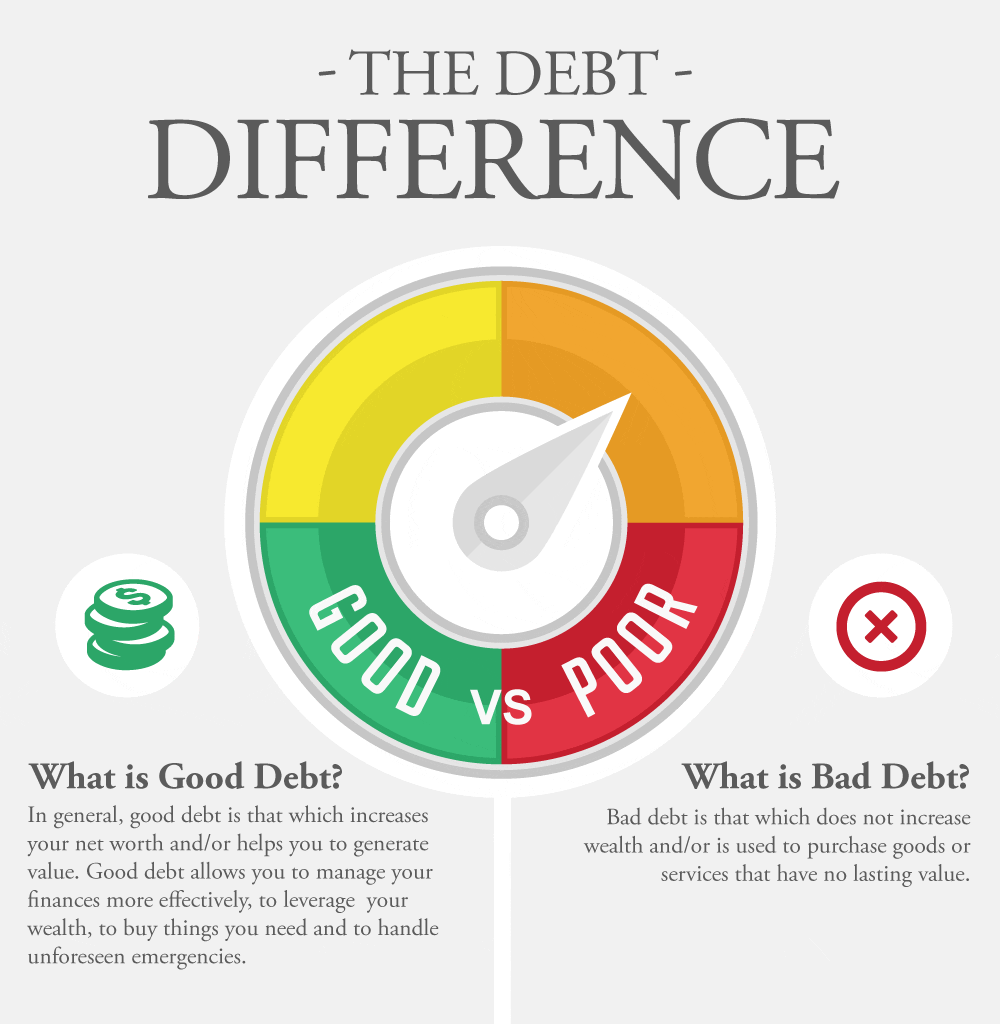
Debt, in itself, is neither inherently good nor bad it is the intent behind its use, the timing of its introduction, and the effectiveness of its management that ultimately determine its impact. For startups, equity is the only viable source of capital due to the high risk and lack of cash flows. As companies transition into their growth phase, debt becomes a powerful instrument to optimize the cost of capital and enhance returns for equity holders.
In the case of mature, cash-generating businesses, debt can be strategically employed to return excess capital to shareholders or reinvest in high-potential opportunities. Ultimately, financial discipline, visibility of future cash flows, and a clear strategic purpose are essential in leveraging debt effectively. For investors and analysts, debt should not be approached with fear but with a nuanced understanding of its role in a company’s capital structure.