




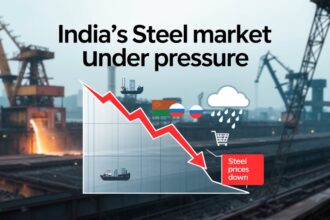
Steel prices in India have gone down in recent weeks, especially for flat products like hot-rolled coil (HRC) and construction steel (rebar). The drop is mainly due to slower demand during the early monsoon, cheaper imports from China and Russia, and a build-up of unsold stock within the country.
The early arrival of rains has slowed down construction and infrastructure work—two major users of steel. As a result, HRC prices have fallen by about 4% since late April, and rebar prices in places like Mumbai are down ₹1,300 per tonne in just one week.
Imports have also increased. Even after India put a 12% duty on imported steel, Chinese steel prices dropped by $20 per tonne since March, making imports cheaper again. Russian steel is also entering the Indian market, which is making things worse for local steel companies.
Because India doesn’t have many options to export steel right now, excess stock is piling up at home. Distributors say they’re getting fewer customer inquiries and fewer confirmed orders.
Demand from many sectors is weak. Infrastructure projects are slowing due to lack of funds and rainfall. Sectors like cars and home appliances are also not buying much steel right now. As a result, steel use in India fell from around 12.96 million tonnes in March to 10.93 million tonnes in April.
Meanwhile, China’s steel exports are rising, even though its own demand is falling. From January to May, China’s steel output dropped by 1.7%, but its exports increased by nearly 10%, pushing cheap steel into markets like India. Agencies like Fitch have warned that this trend could keep pushing Indian steel prices lower, especially with Korean and Japanese imports adding more pressure.
Looking ahead, analysts expect India’s steel demand to grow by only 7–8% in FY26, compared to about 11.5% in FY25. This slower growth will likely limit how fast steel prices can bounce back.
The Indian government is now thinking about putting temporary higher duties (15–25%) on Chinese steel, which could help local producers. Steelmakers are also trying to find new export markets like Africa and Southeast Asia, and are focusing more on specialty, higher-margin steel.
Smaller steel companies are already feeling the pressure, with some cutting production or laying off workers to survive.
In short, Indian steel prices are likely to stay under pressure in the near term, unless domestic demand improves or stricter import rules are brought in. A recovery may come after the monsoon, especially if infrastructure activity picks up and iron ore and input costs stay low.