




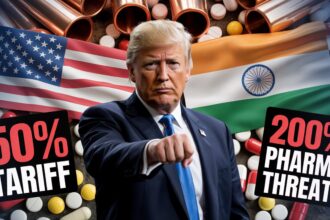
Former U.S. President Donald Trump has announced a sharp increase in import taxes on copper and pharmaceutical products, which could seriously affect India’s export earnings. On July 8, 2025, Trump declared that a 50% tariff on copper imports would come into effect by late July or August 1. He also warned of a possible 200% tariff on medicines and generic drugs, though that will be applied after 12–18 months, giving companies some time to adjust. These new taxes are part of a larger strategy to punish BRICS-aligned countries like India, unless they sign new trade agreements with the U.S. before the August 1 deadline.
India exported around $2 billion worth of copper in FY24–25, with about $360 million going to the U.S., making it India’s third-largest copper export market. A 50% tariff could reduce demand sharply, and this may lead to excess supply building up in India, affecting not just exporters but also local copper manufacturers who may see falling prices and reduced sales.
The bigger concern is the pharmaceutical sector, where the U.S. is India’s top customer, buying nearly $9.8 billion in medicines last year. A 200% tariff, even if delayed, would severely hurt Indian pharma companies, especially those making low-cost generic drugs. These companies rely on high-volume, low-margin business, and such a steep tariff would cut into profits or make products too expensive for the U.S. market. While Indian drugmakers believe they can still compete due to lower production costs, the pressure on earnings and possible supply disruptions can’t be ignored.
On top of this, Trump has also warned of a 10% extra tariff on BRICS member countries, which includes India. This is meant to pressure these countries into aligning more closely with U.S. trade terms. Trump has clearly said there will be no deadline extension beyond August 1, increasing the urgency for India to act fast. A “mini trade deal” with the U.S. is still possible, but time is running out.
India now faces a difficult situation. It must quickly evaluate how these tariffs will affect export volumes, pricing, and profits, especially in copper and pharma. At the same time, the government needs to speed up trade talks with the U.S. to avoid long-term damage. If no deal is reached, India may lose billions in exports, and its companies may face uncertainty, higher costs, and global market setbacks.
This aggressive move by Trump is part of a larger effort to reshape U.S. trade policy and protect domestic industries. But for India, it raises serious economic and diplomatic concerns. How New Delhi responds over the next few weeks will be crucial for exporters, manufacturers, and the future of India–U.S. trade relations.