



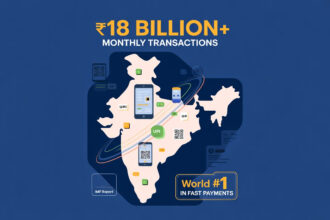
India has officially taken the lead in the global digital payments race. According to a new IMF Fintech Note titled “Growing Retail Digital Payments: The Value of Interoperability,” India now runs the world’s largest fast-payment system, thanks to the massive success of the Unified Payments Interface (UPI). The platform processes more than 18 billion transactions every month, far ahead of other countries.
Launched in 2016 by the National Payments Corporation of India (NPCI), UPI has completely changed how Indians pay, from groceries to bills to online shopping. What makes UPI powerful is its open and shared structure. This means different banks, apps, and payment companies can all work together on one system, making payments faster, easier, and more trusted.
The IMF points out that UPI hasn’t just grown quickly, it’s actually replacing cash in many parts of the country. In places where digital payment options are strong, fewer people are using ATMs or withdrawing cash. This shows a major shift in how people spend, save, and shop.
Another big reason UPI works so well is interoperability, a system where many financial players can connect and work together. Unlike closed systems (where users are stuck with one bank or app), UPI lets people pay across different platforms. This flexibility has made it widely accepted and scalable, even in smaller towns and rural areas.
But the IMF also gives a cautionary note. As UPI keeps growing, a few large players may begin to control most of the traffic, which could hurt the openness and fairness of the system. The report advises Indian regulators to keep a close watch and make sure competition stays healthy, and smaller companies and banks still get equal access.
Still, UPI is now seen around the world as a model for digital payment success. It shows how a simple, open, and fair system can transform an entire country’s payment habits. Other countries are already studying India’s strategy to build their own systems using similar rules.