



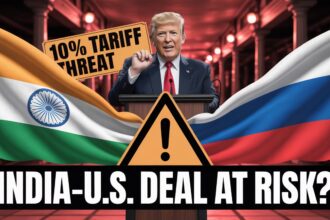
U.S. President Donald Trump made headlines by issuing a fresh threat to countries aligned with BRICS. He warned that any nation supporting what he called “anti-American” would face an additional 10% tariff on all exports to the United States. While no country was mentioned by name, India’s presence in BRICS and its increasing alignment with the group placed it squarely in focus.
In response, India is now considering a 26% reciprocal tariff on a range of American products. These could include agricultural commodities, medical equipment, and energy goods, all critical trade items that may be used as leverage to protect Indian industry and show that the country will not be pressured easily.
Within the BRICS alliance, Trump’s statements sparked a strong pushback. Leaders from Brazil, China, and South Africa criticized the U.S. position, describing the tariff threats as irresponsible and unilateral. Brazilian President Lula da Silva stated that such actions could “destabilize global trade” and reiterated BRICS’ goal of reducing reliance on the U.S. dollar in international transactions. The bloc warned that this kind of rhetoric and action could seriously damage global supply chains and economic recovery momentum.
India now finds itself at a critical crossroads. On one hand, it seeks closer trade and strategic ties with the United States. On the other, its participation in BRICS, especially amid efforts to create a more multipolar global economy, cannot be easily walked back. The 26% tariff being considered is not just a tactical response; it’s a signal of India’s desire to act as a strategically autonomous player on the world stage.
The episode reveals deeper tensions between emerging economic blocs and traditional Western powers. For India, it also adds another layer of complexity to ongoing trade negotiations with the U.S., already complicated by issues around pharmaceutical exports, steel tariffs, and digital trade rules.
As the August 1 tariff deadline approaches, all eyes will be on whether India and the U.S. can find common ground or whether this latest exchange triggers a full-scale trade rift. Either way, this moment is a clear reminder of how geopolitics and global trade are becoming more deeply intertwined and how countries like India must constantly balance diplomacy, development, and domestic priorities.