




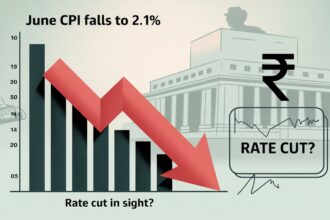
India’s retail inflation, measured by the Consumer Price Index (CPI), fell sharply to 2.10% in June 2025, marking a six-year low and surprising analysts who had estimated it at around 2.5%. This decline offers the Reserve Bank of India (RBI) increased flexibility to consider interest rate cuts in the months ahead.
The steep drop in inflation was driven by a sharp fall in food prices, particularly vegetables, which saw a 19% price plunge. As a result, food inflation contracted by 1.06%, significantly easing pressure on household budgets and headline inflation.
At the same time, core inflation—which excludes volatile food and fuel items, remained stable in the 4.4% to 4.6% range, indicating underlying price pressures persist in sectors like services and housing.
With the headline CPI now well within the RBI’s 2–6% target band for eight consecutive months, analysts believe the central bank has room to cut interest rates, possibly by 25 basis points once or twice this year. However, the RBI is expected to remain data-driven and cautious, likely delaying any action until October or December, rather than moving in August.
On the broader inflation front, wholesale prices (WPI) have also turned negative, reinforcing the disinflationary trend across the economy. In fact, SBI has forecast that inflation could hit a record low in July, and full-year FY26 CPI might even fall below the RBI’s 3.7% forecast.
Overall, this cooling in prices supports a favorable macroeconomic outlook, though the central bank will closely watch core inflation and global commodity trends before making its next policy move.