




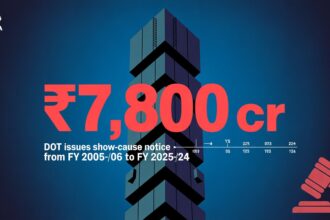
TTata Communications is in the spotlight after the Department of Telecommunications (DoT) sent it a massive demand notice worth ₹7,827.55 crore. This notice, issued on July 17, 2025, is related to Adjusted Gross Revenue (AGR) dues covering a long period—from FY 2005-06 to FY 2023-24.
Out of this total amount, ₹276.68 crore is specifically for deductions the government says were wrongly claimed by Tata Communications under its Internet Service Provider (ISP) and National Long Distance (NLD) licences.
Tata Communications says this demand is not fair. The company argues that its business licences—ILD (International Long Distance), NLD, and ISP—are different from the UASL licences that were at the heart of the 2019 Supreme Court AGR ruling. Based on advice from legal experts, Tata believes that the AGR judgment should not apply to its operations.
The company also shared that it already has appeals pending in the Supreme Court and the Telecom Disputes Settlement and Appellate Tribunal (TDSAT). It plans to defend its case strongly and believes it will succeed in showing that these dues are not valid.
This new demand adds another twist to the long-running AGR issue in India’s telecom sector. Earlier, AGR-related dues had already created heavy financial pressure on big telecom companies. For example, in FY 2018–19:
– Vodafone Idea was asked to pay over ₹59,000 crore,
– Bharti Airtel had dues of around ₹31,000 crore,
– BSNL faced liabilities close to ₹16,200 crore.
Unlike these companies, Tata Communications had not previously appeared in AGR dues estimates, so this ₹7,800 crore notice comes as a surprise. If the demand is upheld by courts, it could hurt Tata Communications’ finances, affect its investor confidence, and complicate future licence renewals.