



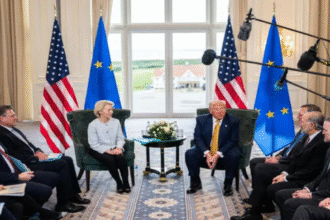
The European Union and the United States have agreed on a preliminary framework to ease trade tensions, particularly focusing on tariffs for EU goods entering the U.S. Under the proposed arrangement, the U.S. will impose a 15% tariff on roughly 70% of European goods, including automobiles, pharmaceuticals, semiconductors, and lumber. This marks a reduction from the previous 27.5% tariff on cars, signaling a significant step toward stabilizing transatlantic trade relations.
However, the deal includes critical exemptions. Products such as aircraft and aircraft parts, generic pharmaceuticals, and certain natural resources will continue to be taxed at the Most Favored Nation (MFN) rate, effectively sparing them from the newly agreed 15% tariff. These exemptions are intended to prevent disruption in sectors considered strategically sensitive or vital for ongoing industrial supply chains.
A particularly nuanced aspect of the agreement concerns EU automobiles. While the 15% tariff reduction on car imports is part of the deal, it is conditional: the lower rate will only take effect after the EU passes legislation to reduce tariffs on U.S. industrial goods, seafood, and agricultural products. Until the EU implements these changes, the existing higher tariffs, including the 27.5% on autos, remain in place. This conditional approach reflects the careful negotiation required to balance the interests of both trading blocs.
Certain sectors, such as wine and spirits, remain unresolved. These products were not included in the agreement, leaving exporters and importers uncertain about the rules that will apply in the near term. Negotiations over these categories are ongoing and will likely require additional diplomatic efforts to reach clarity.
The agreement also includes ambitious EU commitments to strengthen transatlantic trade. The EU has pledged to eliminate tariffs on all U.S. industrial products, provide preferential access for U.S. seafood and agricultural exports, and purchase $750 billion worth of U.S. energy, including LNG, oil, and nuclear sources, by 2028. Additionally, the EU aims to buy at least $40 billion in U.S. AI chips and encourage its firms to invest $600 billion in strategic U.S. sectors over the next five years. These commitments are designed to create a more balanced and predictable trade environment while promoting economic growth on both sides of the Atlantic.
While politically formalized, the agreement is not yet legally binding. Several issues remain under negotiation, including tariffs on steel, aluminum, and the uncertain status of wine and spirits. The ultimate success of the framework depends on timely legislative action in the EU and careful, coordinated implementation by both parties.
Analysts suggest that this framework represents a reset in U.S.–EU trade relations, replacing the threat of unpredictable, steep tariffs with a clearer and more structured approach. While it does not eliminate all sources of friction, the deal provides a roadmap for reducing trade disputes and fostering closer economic cooperation. Importantly, it underscores the strategic importance of industrial policy, energy trade, and technology investment in shaping modern international commerce.
In summary, the preliminary EU-U.S. trade agreement sets the stage for a 15% tariff on most EU goods, maintains critical exemptions, links auto tariff reductions to EU legislative changes, and includes ambitious EU commitments in energy, AI, and industrial investments. While some sectors remain uncertain, the deal represents a meaningful step toward more predictable and stable transatlantic trade relations, benefiting exporters, investors, and industrial stakeholders alike.