




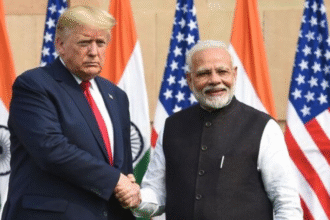
After weeks of trade friction, the United States and India are signaling a diplomatic reset in their economic relationship. U.S. President Donald Trump confirmed that negotiations are ongoing to address trade barriers and expressed his intent to speak with Indian Prime Minister Narendra Modi in the coming weeks to finalize a trade deal. Modi reciprocated the positive tone, calling India-U.S. relations strong and describing the two nations as “close friends and natural partners,” emphasizing efforts to conclude discussions at the earliest.
The resumption of dialogue follows a period of heightened tensions. Earlier, the U.S. had doubled tariffs on Indian imports to 50%, citing unresolved trade barriers and India’s continued purchase of Russian oil. Washington also criticized India’s ties with Russia, accusing it of indirectly supporting the Ukraine conflict—a claim that India has firmly denied. These developments had strained diplomatic and economic ties, but the recent statements suggest a thaw and potential for constructive engagement.
The economic stakes are substantial. In 2024, bilateral goods trade between the U.S. and India totaled approximately $129 billion, with the U.S. running a trade deficit of about $45.8 billion. Analysts note that a successful agreement could influence tariffs, market access, and supply chains for a range of sectors, from technology and manufacturing to agriculture. The immediate market response was positive, with India’s stock markets rising by over 0.5% following the announcement, reflecting investor optimism.
Both leaders leveraged social media to communicate their messages, signaling a willingness to collaborate while managing domestic and international perceptions. However, experts caution that despite the optimistic rhetoric, details remain vague, and no binding agreement has yet been reached. Formal trade talks are expected to resume in September, following the cancellation of a U.S. delegation visit to New Delhi in late August due to unresolved disagreements.
The broader context includes India’s recent engagement with China and Russia, including Modi’s visit to China, which had previously complicated relations with Washington. Any potential trade agreement will therefore not only affect economic exchanges but also intersect with geopolitical considerations, including supply chains, strategic alignment, and global energy dynamics.
While it is still early, the tone of the discussions marks a positive step forward. India aims to protect its economic interests, including maintaining favorable tariffs and securing trade access, while the U.S. seeks to address concerns over trade practices and strategic alignment. Both sides appear committed to dialogue, suggesting that a mutually beneficial deal, though not immediate, is increasingly feasible.
In summary, the resumption of India-U.S. trade talks underscores the delicate balancing act in international trade relations, where economic, political, and strategic considerations intersect. Markets and policymakers will closely watch upcoming negotiations, which could have lasting implications for tariffs, bilateral trade, and Indo-Pacific geopolitical dynamics.