
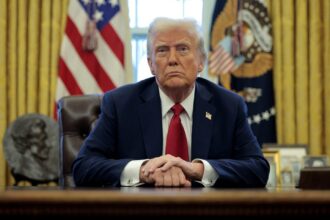
The U.S. government will impose a 100% tariff on imports of branded or patented pharmaceutical products starting October 1, 2025, unless the company is building a U.S.-based manufacturing plant. This move is aimed at encouraging domestic drug production and reducing dependence on overseas supply chains, particularly from countries like China. The announcement has put the Indian pharma sector under market scrutiny, given its large exports to the U.S.
Policy Details and Exemptions
The tariff applies only to branded/patented drugs. Companies already constructing U.S.-based manufacturing facilities are exempt from this levy. Importantly, generic drugs are excluded from this tariff. This distinction is crucial because many Indian pharma companies, including Dr. Reddy’s, Sun Pharma, Lupin, and Aurobindo, are major suppliers of U.S. generics, and thus may benefit indirectly or remain unaffected.
The policy reflects the U.S. administration’s goal of reshoring pharma manufacturing. According to White House Press Secretary Karoline Leavitt, allowing life-saving drugs or critical materials to be manufactured abroad is considered a national security risk. Earlier, the administration had suggested levies as high as 200%, but the current 100% tariff applies specifically to branded imports.
Impact on Indian Pharma
The tariff could shift competitive dynamics in favor of generic drug suppliers, since branded drugs often carry higher margins. Indian companies exporting generics currently supply 45% of U.S. generics by volume and 10–15% of biosimilars. While generics remain tariff-exempt, their thin margins could be affected if related import costs rise, potentially triggering manufacturing challenges or supply disruptions in the U.S.
Specific companies are highlighted in the report:
– Sun Pharma is a notable branded player in the U.S. and could face higher costs under the new tariff.
– Biocon has recently commissioned a U.S. manufacturing facility, which positions it safely outside tariff risk.
– Dr. Reddy’s, Lupin, and Aurobindo primarily supply generics and are expected to continue benefiting from stable U.S. market demand.
Broader Implications
The tariff is part of a broader U.S. strategy to reshore critical industries, reduce foreign dependency, and protect national interests in healthcare. If extended to generics, it could raise U.S. drug costs significantly, likely triggering strong pushback from stakeholders. The announcement has already drawn investor attention to Indian pharma stocks, especially those with significant U.S. exposure.
In summary, the 100% tariff on branded drugs represents a policy risk for U.S.-exposed Indian pharma companies while generics suppliers remain relatively insulated. Companies with U.S.-based production, like Biocon, are advantaged, whereas Sun Pharma and other branded players may need to adjust strategies. Overall, the move could reshape competitive dynamics, emphasizing the growing importance of manufacturing footprint in the U.S. for Indian pharmaceutical exporters.