



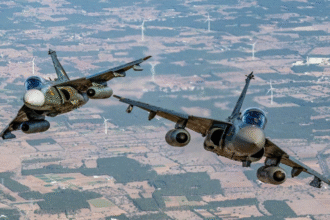
India has signed a $7 billion deal with Hindustan Aeronautics Limited (HAL) to buy 97 Tejas Mk1A light combat aircraft (LCA). The order includes 68 single-seat fighters and 29 twin-seat trainers. More than 64% of the aircraft are made in India, showing the country’s growing capability in defense manufacturing. The delivery of these jets is expected to start in 2027–28 and will continue over six years.
This deal comes at an important time for the Indian Air Force (IAF), as it is retiring its old MiG-21 fleet, which has been in service since the 1960s. About 36 MiG-21s are scheduled to be decommissioned. These aircraft were involved in many past conflicts but also had a history of crashes. Replacing them with the modern Tejas Mk1A will improve India’s air defense capabilities.
The Tejas Mk1A is an upgraded version of India’s indigenous Tejas fighter. It has enhanced avionics, better radar systems, and a higher weapon payload capacity, making it suitable for air superiority, ground attacks, and reconnaissance missions. These features will allow the IAF to respond more effectively to security challenges.
The industrial impact of this deal is significant. Over 100 Indian companies are involved in producing parts for the Tejas Mk1A, which will strengthen India’s defense manufacturing sector. The program has also encouraged technological advancements in aerospace engineering, materials science, and avionics. This shows that India is moving closer to becoming self-reliant in defense production.
Regionally, the induction of the Tejas Mk1A will enhance India’s air defense readiness, especially given rising security concerns in Asia. The deal also demonstrates India’s commitment to defense diplomacy and may improve opportunities for future defense exports.
The government sees this deal as part of a larger effort to modernize the armed forces and reduce dependence on imported weapons. By producing most of the aircraft in India, the country also saves money and creates high-skilled jobs for engineers and technicians.
In summary, the $7 billion Tejas Mk1A deal is not just about buying aircraft; it is a strategic move to strengthen India’s air power, support domestic industry, and advance technology in the defense sector. With modern capabilities, high indigenous content, and broad industrial involvement, the Tejas Mk1A program is set to play a key role in India’s security and aerospace ambitions for years to come.