




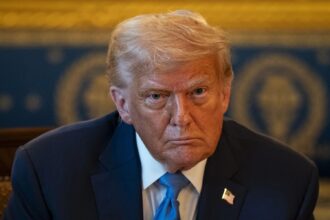
Former U.S. President Donald Trump has announced plans to impose a 100% tariff on all movies made outside the United States. He claimed that foreign countries have been “stealing the U.S. movie business” and framed the move as a solution to a “long time, never-ending problem.” Trump also criticized California, saying the state has been hardest hit due to a “weak and incompetent governor.” This is not the first time he has floated such ideas. In May 2025, he described offshoring of film production as a threat to the U.S., accusing other countries of taking away the movie industry.
Implementing a 100% tariff on foreign-made films would be extremely difficult because modern filmmaking is highly global and interconnected. Many films involve cross-border collaboration, with special effects done in India, color grading elsewhere, and audio mixing in another country. As a result, defining what counts as “made outside the U.S.” is ambiguous and complex.
India’s film industry could face serious challenges if the tariff is enforced. Indian films earn an estimated USD 100–150 million annually from the U.S. market, with big Hindi and Telugu blockbusters sometimes making over USD 10 million from North American box office collections alone. Digital streaming and satellite distribution rights could also be affected. U.S. viewers, especially the South Asian diaspora, might see higher ticket prices or increased subscription costs, which could reduce demand.
The tariff also threatens India’s growing animation and VFX sector. Indian studios have contributed to films like The Lion King, Avengers: Endgame, Dune, Jungle Book, and Interstellar. The sector is projected to grow from USD 1.3 billion in 2023 to USD 2.2 billion by 2026, according to a CII and India Brand Equity Foundation report. A U.S. tariff could disrupt these revenue streams and slow sector growth.
Hollywood itself could also suffer as international markets account for over 70% of U.S. box office revenue, totaling around USD 30 billion in 2024. If the U.S. imposes tariffs, other countries may retaliate with reciprocal tariffs, which could hurt Hollywood exports. Major studios such as Disney, Pixar, and DreamWorks already rely heavily on outsourcing animation and VFX work overseas, including India.
Experts see Trump’s proposal more as a political signal than a fully detailed policy, but it underscores the complexity and interdependence of global filmmaking. For India, the move exposes vulnerabilities in both mainstream films and outsourced VFX/animation work. Higher costs could suppress U.S. viewership, and retaliatory measures could escalate into a trade conflict in the media and entertainment sector. The announcement aligns with Trump’s broader narrative of protecting domestic industries and reversing outsourcing trends.
While the tariff plan is ambitious and politically charged, practical implementation faces many hurdles. Nevertheless, the potential economic impact on Indian cinema and VFX exports is significant, and global studios may need to rethink production and outsourcing strategies if such policies gain traction.