




The ongoing trade relationship between the United States and China has entered a heightened phase as the U.S. announced a 100% tariff on all imports from China, effectively doubling existing duties. This move, set to impact a wide range of products, comes amid mounting friction over trade practices and strategic resources. The new tariffs are scheduled to take effect immediately, raising concerns over potential disruptions in global supply chains.
In addition to tariffs, the U.S. will implement export controls on all “critical software” starting November 1, a measure aimed at restricting China’s access to technology essential for sectors such as semiconductors, artificial intelligence, and advanced computing. These controls are widely seen as a response to China’s recent limitations on exports of rare earth minerals, which account for roughly 70% of global supply and are vital for technology, electric vehicles, defense systems, and semiconductor manufacturing.
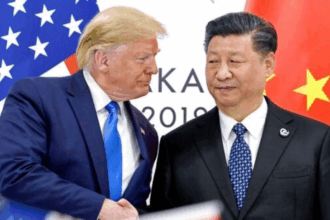
The escalation has prompted sharp exchanges between the two nations. U.S. President Donald Trump described China’s actions as “extraordinarily aggressive” and even suggested the possibility of canceling his scheduled meeting with President Xi Jinping at the upcoming APEC summit. In turn, China criticized the U.S. for double standards, arguing that the American measures threaten ongoing trade discussions and undermine global economic stability.
Industry observers note that the rare earth minerals at the center of this dispute are crucial to multiple high-tech and defense-related industries. Any disruption in supply could have a cascading effect, potentially slowing production in electronics, electric vehicles, and advanced defense equipment worldwide. Both countries have significant stakes in global trade, and the current measures may intensify volatility in commodity markets and technology sectors.
Economic analysts are monitoring how companies dependent on U.S.-China trade will respond. Businesses that rely on Chinese imports may face higher costs due to tariffs, while firms supplying critical technology to China could encounter restrictions, affecting revenue and investment plans. Similarly, global markets may react to heightened uncertainty, with potential impacts on stock exchanges, foreign exchange rates, and supply chains.
Despite the escalation, both governments have signaled a willingness to continue negotiations, albeit amid growing tension. The next few weeks will be critical, as policymakers weigh the economic consequences of their actions against broader strategic goals. Analysts suggest that while a full-scale trade war could have significant implications, there remains scope for targeted measures and diplomatic engagement to manage the situation.
This latest development underscores the complexity of US-China economic relations, where trade, technology, and strategic resources intersect. The international business community is closely watching how these measures will unfold, particularly regarding rare earth mineral supplies, technology transfers, and the broader implications for global trade stability.