



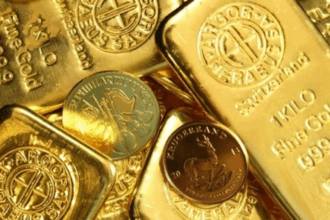
Gold prices rebounded strongly on Monday, climbing back above the US $4,000 per ounce mark after a sharp decline in the previous session. The rally was driven by a weaker U.S. dollar and renewed expectations of a Federal Reserve rate cut, both of which tend to support non-yielding assets like gold.
Spot gold rose 0.7% to US $4,009.39 per ounce, recovering from a steep 3% fall the previous day that had taken it to its lowest level since October 10. U.S. gold futures for December delivery were trading slightly higher at US $4,022.10 per ounce.
The rebound comes after investors shifted their focus back to monetary policy and currency trends, which often play a major role in gold’s price direction. The U.S. dollar index slipped about 0.1%, making gold cheaper in other currencies and increasing its relative appeal for non-U.S. buyers.
At the same time, markets are increasingly betting that the Federal Reserve will cut interest rates in its upcoming policy meeting. Lower rates typically weaken the dollar and reduce the opportunity cost of holding gold, an asset that doesn’t generate yield but is viewed as a store of value.
However, one factor that could temper demand for the metal is the improving sentiment around U.S.–China trade talks. Reports indicate that top economic officials from both sides have hammered out a framework for a potential trade deal, which could ease global uncertainty. If tensions continue to cool, investors may reduce their holdings of safe-haven assets like gold.
So far this year, gold has been one of the best-performing major assets. On a year-to-date basis, prices have gained about 53%, hitting an all-time high of US $4,381.21 on October 20 before the recent correction.
Meanwhile, other precious metals moved in mixed directions. Spot silver fell 0.3% to US $46.74 per ounce, while platinum slipped 1.2% to around US $1,571.85. Palladium also edged lower, down 0.8% at approximately US $1,391.15 per ounce.
Analysts say the rebound above US $4,000 is a positive technical signal, suggesting that investor interest in gold remains firm. The softer dollar and potential for monetary easing are both strong tailwinds. However, they caution that gold’s safe-haven premium could fade if the global geopolitical environment stabilizes.
For investors, the near-term outlook will likely depend on a few key triggers. The most important is the outcome of the Federal Reserve’s policy meeting, where a rate cut is widely expected. Any signals from Fed Chair Jerome Powell about the future path of rates could heavily influence gold’s trajectory.
Other factors to watch include movements in the dollar index, developments in global trade relations, and the relative performance of other metals like silver and platinum. Analysts also point to the recent high of US $4,381.21 as a key resistance level — a test of whether gold can sustain its upward momentum or face renewed selling pressure.
Overall, gold’s bounce above US $4,000 reflects a mix of monetary optimism, currency weakness, and investor caution, setting the stage for another potentially volatile week in global commodity markets.