




The U.S. Federal Reserve has decided to lower its benchmark interest rate by 25 basis points (0.25%), bringing the new target range to 3.75%–4.00%. The move comes as the Fed faces a tough balancing act, supporting growth while managing inflation, all amid an unusual challenge: a government shutdown that has blocked access to crucial economic data.
The decision was not unanimous. The vote was 10–2, with two members disagreeing, one wanted a bigger rate cut of 0.5%, and the other preferred no cut at all. This split vote shows a growing policy divide within the central bank.
In its policy statement, the Fed replaced its usual reference to “incoming data” with “available indicators,” highlighting that many official reports, including jobs and inflation data, are currently unavailable due to the shutdown.
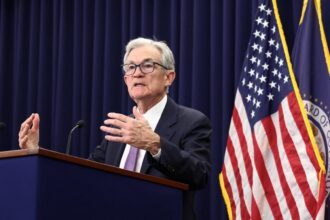
Fed Chair Jerome Powell emphasized that this cut should not be seen as the start of a steady rate-cutting cycle. “A further reduction of the policy rate… is not a foregone conclusion,” he said, adding that the central bank is proceeding carefully until it gets a clearer picture of the economy.
Economic Background
Before the shutdown, data showed job growth slowing and unemployment inching up, though the labour market remained relatively strong. Inflation, however, was still described as “somewhat elevated,” staying above the Fed’s long-term 2% target.
The Fed also announced that it will pause the shrinking of its balance sheet, meaning it will stop reducing the amount of securities it holds, starting December 1. Instead, it will reinvest maturing assets, a move that aims to provide some extra liquidity to financial markets.
Inside the Fed’s Debate
The two dissenting members showed how split the Fed is on the right pace of policy easing.
– Governor Stephen Miran voted for a larger 0.50% cut, saying the economy needed stronger support.
– Kansas City Fed President Jeffrey Schmid, however, wanted no rate cut, warning that inflation could flare up again if the Fed loosens too much.
This divergence, with one arguing for more easing and the other for restraint — underscores the uncertainty about where the economy is heading.
Why It Matters
The rate cut signals that the Fed wants to support the job market and cushion growth, but is wary of doing too much too soon without solid data. Making monetary-policy decisions without full economic visibility increases the risk of both underreacting and overreacting.
Markets had been expecting multiple rate cuts this year, but Powell’s warning may cool expectations. That could affect bond yields, equity prices, and the U.S. dollar. If investors scale back their expectations for quick easing, yields may stay high and risk assets could face pressure.
For global markets, the Fed’s cautious tone means interest-rate differentials may remain wide, possibly strengthening the U.S. dollar. This could influence capital flows and financial conditions worldwide.
In short, the Fed’s latest move shows a shift toward careful, data-constrained policymaking, one where uncertainty, not inflation, is now the biggest variable.