




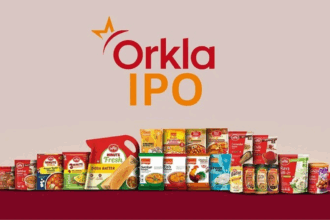
Orkla India Ltd., the maker of well-known brands like MTR Foods, Eastern, and Rasoi Magic, made its stock market debut after a much-awaited ₹1,667 crore IPO. The issue was 100% Offer for Sale (OFS), meaning that existing shareholders sold their shares, and the company itself did not raise any new money through this listing.
The price band for the IPO was ₹695–₹730 per share, and at the upper band of ₹730, Orkla India was valued at around ₹10,000 crore. The IPO saw strong investor demand, with reports suggesting a grey market premium (GMP) of about ₹70 per share, pointing to an expected 9–12% listing gain.
However, there were mixed reports on the actual listing performance. While some estimates indicated a strong debut, a few sources mentioned a muted 2.75% premium, though this figure could not be independently confirmed. If accurate, that would mean the stock listed around ₹750 per share, only slightly above its issue price.
Orkla India’s business is focused on packaged foods, especially in the spices, ready mixes, and instant food categories. With its strong base in southern India, the company is known for products that fit into modern convenience lifestyles, a trend that has been growing rapidly among urban consumers.
At the upper price band, analysts noted that Orkla India’s valuation stood around 31.5× FY26 annualised earnings. Many considered this reasonable for a company with strong brands, wide distribution, and exposure to growing food categories. However, since the IPO was a pure OFS, some investors raised questions about the absence of fresh capital for future expansion.
Analysts highlighted several strengths: trusted brands, an expanding distribution network, and positive consumer trends like urbanization, e-commerce adoption, and the rise of convenience foods. On the flip side, key risks include raw material price inflation, packaging costs, and execution challenges in scaling operations.
For retail investors, a muted listing gain (if around 2–3%) would mean limited short-term upside, shifting the focus to long-term brand strength and stable growth rather than quick profits.
Overall, Orkla India’s IPO reflects investor trust in India’s packaged food story, even if the listing performance turns out to be softer than expected. With strong brands and consistent consumer demand, it could remain a steady compounder for patient investors over time.