




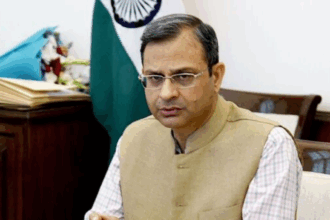
RBI acting Governor Sanjay Malhotra indicated that recent macro-economic data reinforces the case for a repo rate cut in the December monetary policy. Speaking after the October MPC meeting, he noted that the committee had already signalled scope for further easing, and current indicators strengthen that assessment. Following his comments, India’s benchmark 10-year government bond yield fell about four basis points to roughly 6.48%, reflecting market anticipation of a potential rate cut.
On inflation, India’s CPI rose only 0.25% in October, marking the lowest print since 2012. Economists cited in the article suggest that fiscal year 2026 inflation is likely to undershoot the RBI’s forecast of 2.6%, remaining well below the 4% target. Such a low CPI opens room for monetary easing, as inflation is under control.
Regarding the Indian Rupee, Malhotra described its recent weakness as a “natural outcome of inflation gap with advanced economies,” noting that a 3–3.5% annual depreciation is typical. The rupee has been Asia’s worst-performing currency this year, weakening roughly 4% versus the US dollar, but the RBI’s focus remains on mitigating excessive volatility rather than defending a fixed level. This suggests flexibility in exchange-rate policy.
The implications of a potential repo rate cut are significant for borrowers and investors. Lower rates could reduce borrowing costs, increase liquidity, and create a more supportive environment for economic growth. The bond market’s fall in yields signals that investors are pricing in a December cut, reflecting expectations for more accommodative monetary policy.
Caution is warranted, as Malhotra emphasised that the MPC ultimately decides rates. While current inflation is low, it is forecasted to rebound to around 4% next quarter due to base effects. Additionally, global inflation dynamics and continued rupee volatility remain risks that the RBI will weigh before adjusting the repo rate. Markets may respond quickly to new data, meaning expectations of a cut could shift if conditions change.
Overall, the RBI appears positioned to consider monetary easing, with a rate cut in December increasingly anticipated. This development could support credit growth, stimulate investment, and reinforce confidence in India’s macro-economic stability.