



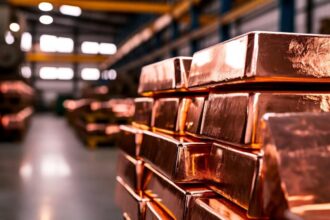
Copper, often called the metal of the future, is trading near record highs as supply tightness meets growing global demand. Prices have been rising sharply due to several structural and macroeconomic factors that suggest the rally could continue in the near term.
On the supply side, global copper production is under pressure. Many established mines are aging, ore grades are declining, and expansion projects are progressing slowly. This combination reduces the ability to increase output quickly. Geopolitical risks, labor challenges, and logistical disruptions further constrain supply, creating a tight market for one of the world’s most essential base metals.
Meanwhile, demand for copper remains strong. The metal is crucial for green energy technologies, including solar panels, wind turbines, and electric vehicles (EVs). The global push toward renewable energy and sustainable infrastructure has increased copper requirements significantly. Beyond green energy, construction, electronics, manufacturing, and data center infrastructure all rely heavily on copper, keeping industrial demand robust.
Investors are closely watching signals from the U.S. Federal Reserve (Fed). Expectations of interest rate cuts or hints of monetary easing tend to weaken the U.S. dollar, making dollar-priced commodities like copper cheaper for non-U.S. buyers. Lower rates also stimulate industrial activity, boosting the demand outlook for metals. Analysts suggest this combination of supply stress and potential demand acceleration is creating a near “perfect storm” for copper prices.
However, risks remain. Price volatility is high, and copper is sensitive to macroeconomic shifts, trade policies, and industrial growth rates. If global economic growth slows or anticipated industrial expansion falters, demand may soften. On the supply side, mining companies could ramp up production, or new projects may come online, easing tightness over time. Any of these changes could trigger price corrections.
For investors, copper remains an attractive commodity play, particularly for those seeking exposure to green energy transition trends or as a hedge against global economic uncertainty. The market is also sensitive to broader factors such as currency strength, interest rate changes, and trade policies.
For industries dependent on copper, including manufacturing, construction, and electronics, high prices may increase input costs. Emerging economies that rely on imported copper, including India, could see higher prices for consumer goods, construction materials, and infrastructure projects. Companies may need to adjust budgets or seek alternative sources to manage rising costs.
In summary, copper’s current rally is being shaped by tight supply, strong industrial and green-energy demand, and macroeconomic expectations. While opportunities exist for investors and commodity traders, participants should be aware of volatility and the potential impact of policy or production changes. The market outlook remains bullish in the near term, making copper one of the most watched metals globally.