



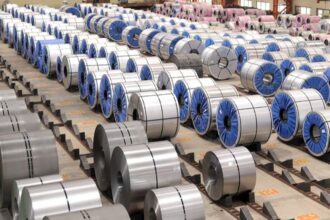
The Government of India has taken a significant step to protect domestic steel producers by imposing an anti-dumping duty on specific steel imports from China. This duty, effective for five years, targets Cold Rolled Non-Oriented Electrical Steel (CRNO), which is widely used in motors, generators, transformers, and other electrical equipment. The aim is to prevent injurious dumping, where imported goods are sold at unfairly low prices, harming India’s steel industry.
The duty applies only to CRNO steel imports, while Cold Rolled Full Hard Silicon Electrical Steel (CRFH), a related product used in manufacturing CRNO, has been excluded. A tariff of $223.82 per tonne has been imposed to reduce unfair competition and support domestic steel production.
This decision follows a detailed investigation by the Directorate General of Trade Remedies (DGTR). The DGTR found that dumped imports were causing material injury to Indian steel manufacturers. Domestic producers had requested the investigation, highlighting concerns about below-cost steel imports from China affecting their businesses.
The anti-dumping duty is part of a broader effort to strengthen the Indian steel sector. Earlier, India had imposed a $121.55 per tonne duty on hot-rolled flat steel from Vietnam for five years. Rising stainless steel imports, which reached 1.73 million tonnes in FY25, have added pressure on domestic producers. Major import sources include China, Indonesia, Vietnam, and South Korea, creating intense competition for Indian steel manufacturers.
Credit rating agency ICRA has noted that structural problems in China have led to record steel exports, contributing to weaker global steel prices. These exports have increased competitive pressure on the Indian steel industry, making measures like anti-dumping duties crucial for maintaining market stability.
The five-year duty on CRNO steel aims to level the playing field for Indian producers. By discouraging below-cost imports, the government seeks to encourage domestic steel production and protect jobs in the steel sector. This move also ensures that Indian manufacturers can compete fairly and continue to grow sustainably.
Overall, this anti-dumping duty strengthens India’s commitment to a self-reliant steel industry. It provides relief to domestic manufacturers and promotes long-term growth in the Indian steel market. By taking such steps, India is signaling its determination to curb unfair trade practices and safeguard its domestic steel industry from external pressures.