



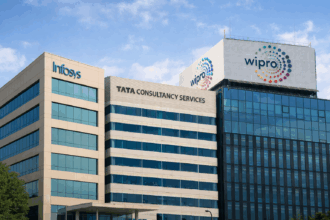
Shares of major Indian IT firms – Infosys, Tata Consultancy Services (TCS), and Wipro, drew strong attention in markets on December 24, 2025, following a significant policy change in the US H-1B visa programme. The US Department of Homeland Security (DHS) announced that the traditional random lottery system for H-1B visas will be replaced with a skill and wage based selection process, effective February 27, 2026, for the FY 2027 cap registration season.
Previously, the H-1B programme issued 85,000 visas annually, 65,000 regular visas and 20,000 for applicants with a US master’s degree or higher. Because applications far exceeded available visas, selection was conducted via a random lottery. This meant all applicants, regardless of skill level or salary, had an equal chance of securing a visa. The lottery system, however, was criticised for allowing companies to hire lower-paid foreign workers, sometimes at the expense of American wages and job opportunities.
Under the new policy, visas will prioritize candidates who are highly skilled and receive higher compensation. The DHS stated that this merit-based approach will curb exploitation and ensure that only top-tier talent is selected for H-1B employment. This move represents a fundamental shift from chance-based selection to a more market driven, merit-focused system.
For Indian IT companies like Infosys, TCS, and Wipro, the change is particularly significant. These firms deploy a large number of professionals to the US under H-1B visas every year. The new system may affect staffing strategies, project allocations, and overall competitiveness. Higher-skilled and higher-paid visa requirements could push IT firms to upgrade employee skills, adjust compensation structures, and prioritizes critical roles when applying for US assignments.
Investors have been closely monitoring these IT stocks because changes in H-1B rules can impact future revenue and earnings, especially for companies with significant US-based operations. While the policy aims to protect US wages, Indian IT firms may face short-term operational adjustments but could benefit in the long term by focusing on high-value, specialized services.
Additionally, a federal judge upheld the $100,000 visa fee rule introduced during the previous administration, which adds another layer of compliance and cost considerations for companies seeking H-1B visas for their employees. Together, these changes signal a more structured and selective approach to hiring foreign talent in the US.
Overall, the removal of the lottery system and the introduction of skill- and wage-based prioritization marks a significant shift in US immigration policy. For Infosys, TCS, and Wipro, it underlines the importance of aligning workforce strategies with evolving regulations, investing in employee skill development, and preparing for a competitive H-1B allocation system. As a result, these IT stocks are expected to remain in the spotlight in the coming months as markets assess potential impacts on business operations, profitability, and US expansion plans.