




SoftBank Group has announced the acquisition of DigitalBridge Group, a leading digital infrastructure investor, in a deal valued at approximately $4 billion. This acquisition represents a strategic component of SoftBank’s broader AI ecosystem expansion, focusing on the critical physical infrastructure required for artificial intelligence deployment. SoftBank will pay $16 per share in cash, representing a 15% premium over DigitalBridge’s recent closing price. The transaction is expected to close in the second half of 2026, pending regulatory approvals and customary closing conditions. Post-acquisition, DigitalBridge will continue to operate as a separate entity under its existing leadership, maintaining operational continuity.
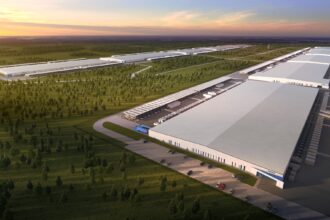
DigitalBridge is a globally recognized digital infrastructure investor managing assets in data centres, mobile towers, fibre networks, and edge computing infrastructure. As of September 30, 2025, DigitalBridge managed around $108 billion in assets, making it one of the largest dedicated players in digital infrastructure investment worldwide. This infrastructure is critical to supporting AI workloads, cloud computing, high-performance computing (HPC), low-latency applications, and enterprise connectivity. By acquiring DigitalBridge, SoftBank gains direct exposure to the backbone of AI computing infrastructure, including on-premises and cloud-connected data centres, high-speed fibre networks, and telecom tower networks required for 5G, edge AI, and high-capacity computing applications.
The acquisition announcement immediately impacted DigitalBridge’s stock, with shares rising nearly 9.7% to $15.27, reflecting investor confidence in the strategic AI infrastructure play. Analysts highlight that the deal positions SoftBank beyond traditional AI software and chips investments, granting it downstream control over critical computing and connectivity systems that underpin global AI deployment. This aligns with SoftBank’s long-term vision to invest in AI infrastructure assets, high-bandwidth networks, and scalable computing platforms that support machine learning models, generative AI, and enterprise AI workloads.
Strategically, the SoftBank-DigitalBridge acquisition reinforces several key objectives:
- AI Infrastructure Growth: Controlling data centres, fibre optic networks, and mobile towers enables SoftBank to directly support AI scalability and deployment.
- Physical Computing Advantage: The focus shifts from AI software and algorithms to ownership of hardware and connectivity infrastructure critical for high-demand AI applications.
- Long-Term Strategic Positioning: Securing access to premium computing assets and network infrastructure ensures a competitive edge as AI adoption grows globally, particularly in cloud AI, edge AI, and hybrid AI deployments.
Financially, the deal is structured as a cash transaction, emphasizing SoftBank’s commitment to building a robust AI ecosystem rather than merely expanding its investment portfolio. The acquisition also enables SoftBank to influence AI infrastructure markets, enhancing its role in cloud computing, data centre operations, and high-speed connectivity services.
In summary, SoftBank’s acquisition of DigitalBridge for $4 billion is more than a corporate purchase; it is a strategic AI infrastructure play designed to integrate data centres, mobile towers, and fibre networks into its ecosystem. The move aligns with SoftBank’s vision of building a comprehensive AI platform, ensuring access to high-performance computing, low-latency connectivity, and scalable infrastructure required to support global AI growth. As the deal progresses toward closure in H2 2026, the global AI and digital infrastructure sectors will watch closely for its impact on investments, AI adoption, and infrastructure valuation trends.