



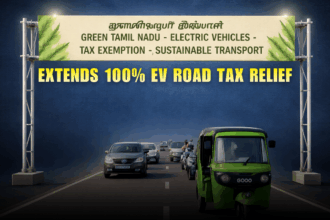
The Tamil Nadu government has announced that the 100% road tax exemption for electric vehicles (EVs) will now continue until December 31, 2027. This policy applies to all battery-operated vehicles, including passenger cars, two-wheelers, auto-rickshaws, and other electric transport and non-transport vehicles. Earlier, the exemption was set to expire at the end of 2025, but the extension gives both consumers and businesses a longer window of benefits.
The main aim of this move is to encourage more people to adopt EVs in the state. Electric vehicles in Tamil Nadu accounted for just around 7.8% of total vehicle registrations in 2025. By extending the tax waiver, the government hopes to make EVs more affordable for buyers, boost adoption rates, and support the growing clean mobility ecosystem. This initiative also reflects the state’s commitment to sustainable and environmentally friendly transport solutions.
For consumers, the road tax exemption effectively lowers the on-road price of EVs. This can make electric cars and two-wheelers more competitive compared to petrol or diesel vehicles. The exemption also provides long-term clarity for buyers and businesses, allowing them to make confident investment decisions without worrying about sudden policy changes.
The policy is also significant for EV manufacturers and industry players. Companies operating in Tamil Nadu, such as VinFast and other new entrants, can benefit from predictable costs and supportive government policies. Lower road tax helps manufacturers price their vehicles competitively while maintaining profitability. It also supports other parts of the EV ecosystem, including charging infrastructure providers and dealerships, by ensuring continued consumer interest and market growth.
Officials from the state government said the extension demonstrates Tamil Nadu’s focus on fostering clean mobility and supporting local EV production. The move aligns with national efforts to promote electric mobility, reduce carbon emissions, and transition towards sustainable energy solutions. By incentivizing both buyers and producers, the policy encourages a holistic approach to developing the EV sector.
The road tax exemption policy is part of a broader set of incentives offered to EV buyers and manufacturers in Tamil Nadu. These include waivers on registration fees and other measures to reduce upfront costs for consumers. With these policies, the state aims to increase EV penetration, expand the domestic EV market, and promote innovation in electric mobility technologies.
Industry experts believe that this extension will be particularly helpful for new EV buyers who have been hesitant due to higher upfront costs. With tax exemptions and government incentives, electric vehicles become more accessible, which could lead to faster adoption and growth in the state’s EV market. The policy also provides confidence to investors and businesses looking to enter the EV sector, creating opportunities for expansion and long-term planning.
In simple terms, the 100% road tax exemption means that buyers of electric vehicles in Tamil Nadu do not have to pay the usual motor vehicle tax when registering their EVs. This cost reduction makes EVs more attractive, encourages more people to switch from fossil fuel vehicles, and supports the state’s clean energy and sustainability goals.
With the policy now extended until the end of 2027, Tamil Nadu is sending a strong signal that it is committed to growing the electric vehicle market. Both buyers and businesses can plan for the long term, knowing that the government supports EV adoption and local production. This move is expected to accelerate the shift toward electric mobility, improve air quality, and help the state play a leading role in India’s EV growth story.