




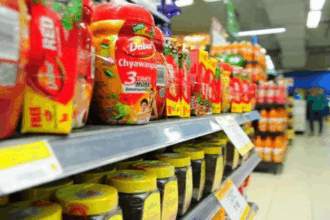
Dabur India, one of the country’s leading FMCG companies, is showing early signs of demand recovery in the third quarter of FY26 after a period of muted consumer activity earlier in the fiscal year. The revival comes on the back of the government’s Goods and Services Tax (GST) cuts, which came into effect on September 22, 2025, lowering taxes on several consumer goods categories.
During the period before the GST cut, demand for many of Dabur’s products had slowed. Consumers and retailers were waiting for the reduced tax rates to take effect, delaying their purchases. This temporary disruption impacted sales across urban and rural markets, particularly in categories like toothpaste, hair oils, fruit juices, honey, and coconut water. Dabur’s management reports that approximately 60% of the company’s product portfolio falls within the categories benefiting from the new GST rate of 5%, down from the earlier 12–18% slab. This reduction in taxes made products more affordable, boosting consumer sentiment and stabilizing trade conditions.
As a result, Dabur expects its consolidated revenue for Q3 FY26 to grow in the mid-single digits, a notable improvement over roughly 3% growth during the same quarter last year. The company also anticipates that profit after tax and operating profit will rise faster than revenue, reflecting the combined effect of stronger consumer demand and cost efficiencies in operations.
Several key categories are poised for strong growth in this quarter. Dabur expects double-digit increases in sales of honey, toothpaste, hair oils, fruit juices, and coconut water. These products have benefited the most from lower taxes and renewed consumer purchases, particularly in rural markets where affordability is a key factor. Urban markets have also shown signs of recovery, driven by stabilized prices and renewed buying activity post-GST cuts.
The company’s management notes that higher commodity costs and weaker urban demand had previously weighed on performance, but these challenges are now being offset by improved trade conditions and positive macroeconomic factors. Favorable market conditions, including stabilized supply chains and renewed consumer confidence, are expected to support continued revenue growth in the coming quarters.
Dabur’s early demand revival highlights the significant role of tax reforms in shaping consumer behavior. The GST rate reductions created a more attractive pricing environment, encouraging households to resume purchases that were delayed earlier in the fiscal year. This has not only supported revenue growth but also helped improve overall market dynamics for the company.
For investors and market watchers, Dabur’s performance in Q3 FY26 signals resilience in India’s FMCG sector. Even after a temporary slowdown caused by policy changes, core product categories have bounced back strongly. The combination of improved demand, lower GST rates, and a favorable macroeconomic backdrop is expected to create a positive growth trajectory for the rest of the fiscal year.
Looking ahead, Dabur is well-positioned to capitalize on the recovering consumer sentiment, particularly in high-demand categories like health and hygiene products, edible oils, beverages, and personal care items. The company’s strategic focus on both urban and rural markets ensures that it can cater to a broad consumer base while maintaining consistent revenue growth.
In summary, Dabur India’s Q3 FY26 performance underscores the effectiveness of GST cuts in reviving consumer demand. Mid-single-digit revenue growth, strong category-level performance, and improving trade conditions indicate that the company is successfully navigating short-term disruptions. With favorable market conditions and renewed consumer confidence, Dabur is set for a steady recovery, benefiting both the company and its investors in the months ahead.