




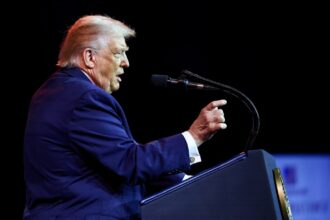
U.S. President Donald Trump has proposed a historic increase in America’s defence spending for the fiscal year 2027. The plan calls for a $1.5 trillion budget, roughly 50% higher than the current 2026 allocation of $901 billion, which would make it the largest military budget in U.S. history. Trump described the move as necessary to build a “Dream Military” capable of confronting global threats and ensuring the nation’s security amid what he termed “troubled and dangerous times.”
Trump’s Rationale for the Increase
Trump said the expanded budget is designed to strengthen U.S. armed forces and enhance strategic readiness around the globe. He argued that recent foreign operations, including the U.S. capture of Venezuelan President Nicolás Maduro and actions in Latin America, underscore the need for a more robust military.
He suggested that a portion of the additional funding could come from tariff revenues collected on imports from other countries. According to Trump, tariffs have grown significantly, providing a new source of income that could support higher defence spending without putting undue strain on the federal budget.
Legislative Approval Required
The proposed $1.5 trillion budget will need approval from the U.S. Congress before it can take effect. While some Republicans support boosting defence spending, fiscal conservatives and Democrats may push back. Concerns center on long-term fiscal sustainability and the potential impact of such a large increase on federal deficits.
Impact on Defence Contractors
Trump also included directives aimed at major defence companies. He warned firms like Raytheon, Lockheed Martin, and Northrop Grumman that stock buybacks and dividend payouts could be restricted unless production is accelerated to meet military demand. This initially caused some stock price declines for defence contractors, reflecting investor concerns about policy changes and operational mandates.
Strategic and Global Implications
If implemented, the proposed budget would significantly widen the gap between U.S. defence spending and that of other major global powers, including China and Russia. Analysts note that such a move would signal a highly assertive U.S. military posture, intended to reassure allies while deterring potential adversaries.
Trump emphasized that the new budget would allow the United States not only to build advanced military capabilities but also to support domestic economic measures, such as potential debt reduction and dividends to moderate-income citizens. This positions the proposal as a combination of defence strategy and economic messaging ahead of 2027.
Market and Political Reactions
Markets reacted cautiously to the announcement. While defence stocks initially fell due to uncertainty over the president’s comments on production mandates and dividend restrictions, analysts note that higher military budgets generally benefit contractors in the medium term. Politically, the plan is expected to ignite debates over federal spending priorities, fiscal discipline, and the balance between defence and social programmes.