



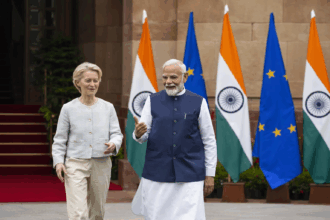
India is making significant progress in its trade negotiations with the European Union as the country moves to secure a landmark Free Trade Agreement (FTA). According to Commerce Secretary Rajesh Agarwal, 20 out of 24 chapters of the India-EU FTA have been successfully closed. This achievement highlights a major step forward in long-running discussions aimed at boosting trade between India and the EU, one of India’s largest economic partners. With only a few issues remaining, the deal is now in its final and most challenging phase of negotiation.
The timing of the agreement is strategic. Indian officials are working to conclude the deal before EU leaders visit the country later this month to attend the Republic Day celebrations and co-chair the 16th India-EU Summit. European Council President Antonio Costa and European Commission President Ursula von der Leyen are scheduled to participate in these high-level events, creating a sense of urgency for negotiators. Officials aim to finalize the agreement in time for a formal announcement at the summit, followed by a signing ceremony.
One key aspect of the deal is the exclusion of agricultural products. Both India and the EU agreed to leave agriculture out of the current FTA framework to safeguard politically and economically sensitive sectors. Indian agriculture is particularly delicate, with millions of livelihoods depending on it. This approach mirrors past negotiations with the United States, where agriculture has also been a major sticking point. By excluding agriculture, both sides hope to prevent domestic backlash while focusing on broader trade liberalization.
Despite the progress, several complex issues remain unresolved. Environmental and regulatory matters, such as the EU’s Carbon Border Adjustment Mechanism (CBAM), could affect exports of metals, steel, aluminum, and other carbon-intensive industries. Additionally, market access for automobiles and alcoholic beverages like whiskey is still under discussion due to differences in tariffs and local regulations. Resolving these final chapters will require careful negotiation to align standards and policies between India and the EU.
The push for the India-EU FTA comes against the backdrop of stalled trade talks with the United States. US-India negotiations have faced delays and uncertainty, resulting in high tariffs on Indian exports, particularly steel and aluminum. Some Indian businesses have already shifted orders to countries like Bangladesh, Vietnam, and China to avoid US tariffs. This situation has added urgency to the EU trade negotiations, as India seeks to diversify its export markets and reduce dependency on any single country.
Once signed, the India-EU FTA is expected to be one of the largest trade agreements India has ever entered. It will provide expanded market access for Indian goods and services, supporting exports in sectors such as textiles, apparel, and IT services. The agreement will also strengthen economic ties with the EU, providing a more stable trading environment amid global protectionist trends.
In conclusion, India is on the cusp of a historic trade milestone with the European Union. The India-EU Free Trade Agreement, with 20 of 24 chapters closed, demonstrates strong progress in negotiations and signals India’s strategic push to diversify trade partnerships. While remaining challenges such as carbon taxes, automobiles, and liquor exports must be resolved, the deal offers a significant opportunity to boost Indian exports and reduce reliance on the US market. With EU leaders visiting for the Republic Day celebrations and the India-EU Summit, finalization is expected soon, marking a major milestone for India’s trade policy.