




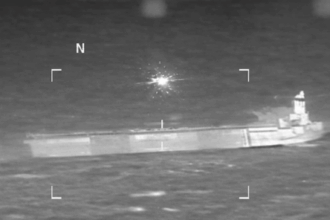
The United States has intensified its campaign to enforce sanctions on Venezuelan oil exports by seizing another tanker, Veronica, in the Caribbean Sea on January 15, 2026. This is the sixth such tanker intercepted in recent weeks as part of a broader effort to block illegal shipments of Venezuelan crude and ensure compliance with U.S. embargoes. The operation was carried out early in the morning, with U.S. Marines, sailors, and Coast Guard personnel boarding the vessel safely and without any confrontation.
The seizure reflects Washington’s ongoing strategy to tackle the so-called “shadow fleet” of tankers that transport Venezuelan oil while flying false or foreign flags to evade detection. By targeting vessels like Veronica, the U.S. aims to tighten control over Venezuela’s oil trade and prevent shipments that violate sanctions. Homeland Security Secretary Kristi Noem emphasized that enforcing sanctions law remains a top priority, highlighting the importance of upholding international trade rules and restricting unauthorized oil movements.
The operation was conducted under the oversight of the U.S. Southern Command and received tactical support from the USS Gerald R. Ford aircraft carrier, underlining the military’s role in sanction enforcement. The timing of the seizure was notable, occurring just before a scheduled meeting between U.S. President Donald Trump and Venezuelan opposition leader María Corina Machado. Analysts suggest that the coordinated timing signals an escalation of U.S. diplomatic and military pressure on Venezuela, linking sanctions enforcement with broader geopolitical strategy.
This latest action comes amid a series of similar operations. Since mid-December 2025, U.S. forces have intercepted six tankers suspected of carrying Venezuelan crude in violation of sanctions. Many of these vessels operate as part of a shadow fleet, which reflags ships or uses complex shipping routes to bypass U.S. restrictions. Legal authorities in the U.S. are pursuing warrants to seize additional vessels connected to Venezuelan oil, showing that Washington is combining military operations with legal and regulatory action to curb illicit exports.
For Venezuela, these seizures pose significant economic challenges. Crude exports, already weakened by existing sanctions and a maritime blockade, are further limited as the U.S. continues to intercept ships. The ongoing enforcement actions signal a clear intent by Washington to dominate key aspects of Venezuela’s oil flow and infrastructure. The pressure comes amid political uncertainty following the ouster of President Nicolás Maduro and a continuing standoff between the U.S. and the Venezuelan government.
Experts note that U.S. sanctions and tanker seizures also have broader regional implications. By targeting Venezuelan oil exports, the U.S. is influencing energy supply in the Caribbean and Latin America while sending a message to other countries involved in shipping Venezuelan crude. The operations aim to disrupt the shadow fleet network, limit the ability of vessels to circumvent sanctions, and reinforce U.S. economic leverage over the Venezuelan oil sector.
Despite the net impact on Venezuela’s exports, the market reaction has been mixed. Analysts suggest that while the seizure of vessels like Veronica disrupts short-term oil shipments, long-term effects depend on the shadow fleet’s ability to adapt or reroute cargo through other channels. Nevertheless, the consistent enforcement of sanctions by the U.S. is likely to raise costs for Venezuelan oil shipments and further reduce revenue for the country’s energy sector.
In summary, the interception of the Veronica tanker is part of a coordinated U.S. effort to enforce sanctions on Venezuelan crude exports, prevent illegal shipments through shadow fleets, and exert strategic influence in the region. With six tankers seized in recent weeks, U.S. authorities are demonstrating that sanctions enforcement combines military, legal, and diplomatic measures. This initiative underscores the growing pressure on Venezuela’s oil industry and the U.S. commitment to restricting unauthorized oil flows, all while emphasizing maritime security and international sanctions compliance.