




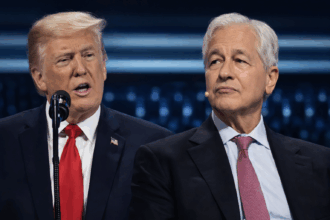
Former U.S. President Donald Trump has launched a major legal battle against one of America’s biggest banks. On January 22, 2026, Trump filed a civil lawsuit in a Florida state court in Miami-Dade County against JPMorgan Chase & Co. and its CEO Jamie Dimon. The lawsuit seeks $5 billion in damages and centers on accusations that the bank unfairly cut off his access to banking services for political reasons.
At the heart of the case is Trump’s claim of “debanking.” In simple terms, debanking refers to a bank closing or restricting customer accounts. Trump alleges that JPMorgan closed several of his personal and business accounts in early 2021, shortly after the January 6 Capitol riot. He argues that these actions were not based on normal business or risk reasons but were driven by political pressure and negative sentiment toward him following the events at the Capitol.
According to the complaint, Trump and his related business entities were given short notice before their accounts were shut. He claims the bank did not offer clear explanations and that the sudden closures disrupted financial operations and forced him to urgently search for alternative banking arrangements. Trump’s legal team says this caused both financial damage and reputational harm.
The lawsuit also makes a more serious accusation. Trump claims that JPMorgan, allegedly under Jamie Dimon’s authority, placed him, his family, and associated businesses on a reputational “blacklist.” He argues this discouraged other banks from doing business with them, worsening the impact of the account closures and limiting access to financial services.
This legal action follows Trump’s public statements in recent weeks, where he said major banks had unfairly targeted him and other conservatives by denying banking services. His lawsuit is part of a wider political debate in the United States over whether financial institutions can refuse services based on reputational or political risk.
JPMorgan has strongly denied the allegations. The bank has stated that it does not close customer accounts based on political or religious beliefs. Instead, it says account decisions are made only when there are legal, compliance, or regulatory risk concerns, which is standard practice across the banking industry. JPMorgan has also said it respects Trump’s right to pursue legal action but plans to defend itself in court, calling the lawsuit without merit.
The case also comes at a time of broader tension between Trump and major financial institutions. Trump has previously criticized large banks and has supported policy proposals aimed at limiting banks’ ability to deny services. On the other side, banking leaders, including Jamie Dimon, have opposed some of Trump’s financial policy ideas, such as proposals to cap credit card interest rates.
While the lawsuit does not yet include specific details of which accounts were closed or the exact financial losses claimed, it marks a significant escalation in the ongoing debate over “debanking” and the role of large banks in managing reputational risk.
As the case moves forward, it is expected to attract strong political, legal, and market attention. For now, Trump is positioning the lawsuit as a fight against political discrimination in financial services, while JPMorgan is standing by its claim that its actions were based purely on risk management and compliance requirements.