



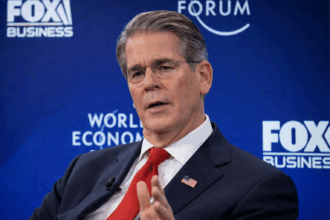
The United States has signaled a possible rollback of extra tariffs on Indian imports, marking a positive development in bilateral trade relations. U.S. Treasury Secretary Scott Bessent made the comments during an interview at the World Economic Forum in Davos, a key global economic forum. His statement suggested that there may now be a pathway to remove the additional 25% tariff that had been imposed on India.
The extra tariffs were originally imposed because India continued to buy crude oil from Russia, despite U.S. pressure. In December 2025, India sharply reduced its imports of Russian oil, hitting a two-year low. This reduction led to a rise in oil imports from OPEC countries, reaching an 11‑month high. Bessent indicated that the collapse in Russian oil purchases by India has “worked” in reducing trade pressure and opened the possibility of removing the tariffs.
Earlier, under the Trump administration, U.S. tariffs on certain Indian goods had doubled to 50%, including the extra 25% linked to Russia oil. Trump had also warned that tariffs could increase further unless India cut its Russian crude imports significantly. Bessent’s comments mark a shift in tone, signaling that there is now a potential path to ease these trade restrictions.
This situation highlights an unusual link between energy sourcing and trade policy. Normally, tariffs are imposed to protect domestic industries or address trade imbalances. In this case, U.S. tariff policy was explicitly connected to India’s crude oil purchases from Russia, showing how geopolitics can directly influence trade.
While Bessent’s remarks are encouraging, uncertainty remains. He did not provide a timeline or specific conditions for the tariff rollback, only suggesting that it is possible. This means that while the path to relief exists, it is not guaranteed or immediate.
Overall, the possibility of tariff relief comes at a time when India has strategically shifted its oil imports away from Russia, signaling responsiveness to global trade pressures. If the rollback occurs, it could improve trade relations between the U.S. and India, easing tensions that have built over recent years.
The development also underscores the broader theme that global energy decisions can impact international trade policies. Businesses in India and the U.S. will closely watch any updates, as tariff relief could positively affect trade volumes, prices, and investment decisions.
In summary, U.S. Treasury Secretary Scott Bessent has opened the door to a possible rollback of the extra 25% tariff on Indian imports, tied directly to India’s sharp reduction in Russian oil purchases. While the details and timing remain uncertain, this marks a positive signal for U.S.–India trade relations going forward.