




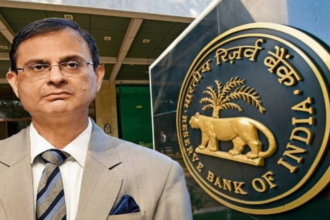
The Reserve Bank of India (RBI) announced its monetary policy decision on February 6, 2026, keeping the key policy repo rate unchanged at 5.25%. The decision was taken unanimously by the Monetary Policy Committee (MPC), led by RBI Governor Sanjay Malhotra. Along with the rate decision, the central bank retained its neutral policy stance, signalling a wait-and-watch approach as it balances growth support with inflation control.
Holding the repo rate steady means the RBI is neither rushing to cut interest rates further nor planning to increase them in the near term. A neutral stance gives the central bank flexibility to respond to future economic data. The RBI made it clear that its future actions will depend on how inflation and growth trends evolve over the coming months.
One of the key reasons behind the pause is the strong economic momentum seen in India. The RBI upgraded its real GDP growth forecast for FY26 to 7.4%, reflecting confidence in domestic demand, government spending, and improving external conditions. Supportive factors such as the Union Budget, ongoing structural reforms, and recent trade agreements with major partners like the United States and the European Union have strengthened the growth outlook.
Inflation also remains well under control. The RBI stated that consumer price inflation (CPI) is expected to stay within the target range of 2% to 4%. While some quarters saw a slight upward revision in inflation estimates, overall price pressures are still considered comfortable. This gives the central bank room to stay patient without taking aggressive policy action.
The February pause also comes after a meaningful easing cycle in 2025. During the previous year, the RBI reduced the repo rate in stages by a cumulative 100 basis points when inflation was subdued and growth needed support. After bringing the rate down to 5.25% in late 2025, the RBI now believes those cuts are still working their way through the economy, reducing the need for immediate further easing.
For borrowers, the decision means stability. Home loan, vehicle loan, and business loan interest rates are likely to remain steady in the near term. While banks may still pass on the benefit of earlier rate cuts, fresh relief is unlikely unless the RBI changes its stance in future meetings. For banks, a stable policy environment helps with better planning of credit growth and margin management.
Financial markets generally view the neutral stance as a balanced signal. It indicates that the RBI is confident about growth but remains alert to inflation risks. Investors often prefer such predictability, especially in a global environment marked by uncertainty.
The RBI also highlighted the resilience of India’s external sector. Strong services exports, steady remittance inflows, and diversified trade partnerships have helped cushion the economy from global shocks. According to the central bank, these factors, combined with structural reforms, provide long-term support to India’s growth story.
Going ahead, the RBI will closely monitor food prices, core inflation trends, consumption demand, investment activity, and global developments. Any future rate action will be strictly data-dependent. For now, the central bank has chosen stability over surprise, reinforcing confidence in India’s economic fundamentals.