



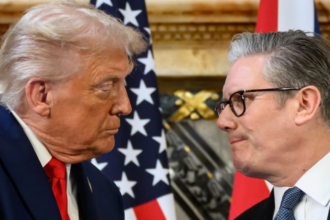
The United Kingdom has blocked the United States from using Royal Air Force (RAF) bases in Britain to launch potential military strikes against Iran, according to reports. UK Prime Minister Keir Starmer exercised his authority to deny the request from US President Donald Trump, amid escalating tensions over Iran’s stalled nuclear negotiations. The decision highlights the UK’s legal control over domestic bases and signals caution in committing to direct military action.
The US had been preparing extensive contingency plans for a possible strike on Iran. This buildup involved deploying long-range bombers, aerial refueling aircraft, and significant troop reinforcements in the Middle East. Officials described the deployment as the largest American military presence in the region since the 2003 Iraq invasion, indicating readiness to act within days. Potential launch sites included multiple strategic bases, such as Diego Garcia in the Chagos Islands, RAF Fairford in Gloucestershire, and other allied European airbases.
The operational and legal distinction between Diego Garcia and UK-based RAF facilities is critical. While the US can operate from Diego Garcia without explicit UK consent due to existing defense agreements, using RAF bases in Britain requires formal UK government approval. In this case, legal advisors warned that participation in airstrikes against Iran could violate international law. Acting on this advice, the UK declined to authorize the use of its RAF bases for bombing operations, asserting its legal authority over domestic military infrastructure.
Trump’s request and the subsequent refusal have had diplomatic repercussions. He reportedly withdrew support for the UK’s planned sovereignty transfer of the Chagos Islands to Mauritius and issued public warnings urging the UK to “remain strong” and not “give away” the territory. Trump also signaled that military action, if necessary, might involve Diego Garcia and RAF Fairford, should Iran fail to reach a “meaningful” nuclear agreement within the next 10 to 15 days. He acknowledged that previous US airstrikes had significantly reduced Iran’s nuclear capabilities, but stressed that further action could still be required.
The decision underscores a delicate balance between allied military cooperation and adherence to legal frameworks. It also highlights how domestic laws can influence international military strategies, even when major allies are involved. With the situation in the Middle East tense, the denial of RAF access may limit US operational options while reinforcing UK sovereignty and legal compliance.
Overall, the UK’s refusal reflects both a commitment to international law and caution in escalating military conflicts, while the US continues to maintain contingency plans. Markets and global observers remain watchful, given the potential impact on regional stability, energy security, and geopolitical tensions in the Middle East.