




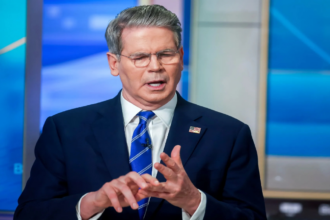
The United States government is likely to increase its broad import tariff rate from 10% to 15% this week, according to comments from Treasury Secretary Scott Bessent. The move would mark a significant escalation in the trade strategy of the administration led by Donald Trump, signaling that Washington is preparing to intensify its protectionist stance toward global imports.
Bessent revealed the potential timeline during an interview on CNBC, indicating that the tariff hike could be implemented soon. If approved, the increase would apply to a wide range of imported goods entering the United States, raising costs for foreign exporters and potentially affecting global trade flows. The development represents the clearest indication so far that the administration intends to move forward with its earlier plan to raise tariffs to 15%.
The tariff debate intensified after a major legal challenge to the administration’s earlier trade policy. The US Supreme Court previously struck down most of the earlier tariff regime introduced by the Trump administration. Those tariffs had been a central pillar of the president’s broader trade strategy aimed at protecting domestic industries and reducing reliance on foreign imports.
Following the court ruling, the government introduced a temporary universal tariff of 10% on imports. While Trump had suggested that tariffs could eventually be raised to 15%, the administration initially chose to implement the lower rate while it reviewed legal options and trade frameworks. Now, officials appear ready to proceed with the higher tariff level.
The current tariff policy is temporary and has been implemented using legal authority that allows the government to impose tariffs for a limited period of around 150 days. During this timeframe, trade officials are expected to examine alternative legal mechanisms that could support a longer-term tariff strategy. Bessent said the government intends to use this window to conduct policy reviews and identify trade tools that can withstand future legal challenges.
Despite the broad nature of the tariff proposal, not all trading partners may face the same level of duties. The European Union is expected to avoid the higher 15% tariff because it already has a trade framework agreement with the United States. Under current discussions, EU exports may remain subject to the existing 10% tariff instead of the higher rate. This suggests that the administration could adopt a selective approach when applying tariff increases, depending on existing trade relationships and agreements.
Looking ahead, the administration plans to explore alternative legal authorities to rebuild its tariff regime. Officials may rely on measures such as Section 301 tariffs, which target unfair trade practices, and Section 232 tariffs, which can be imposed for national security reasons. These legal tools have historically been more difficult to challenge in court and could provide a more durable framework for the government’s trade agenda.
According to Bessent, the administration believes it may be able to restore tariff levels similar to those that existed before the Supreme Court ruling within the next five months. If implemented, the 15% tariff would represent a significant step toward reshaping US trade policy and could have wide-ranging implications for global commerce, supply chains, and international economic relations.