




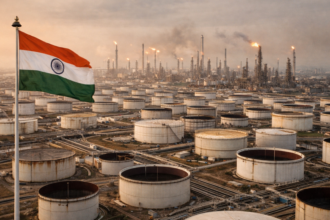
India has reassured markets that the country has adequate oil stocks to manage short-term supply disruptions, even as geopolitical tensions in the Gulf region threaten global energy flows. The assurance came from the Ministry of Petroleum and Natural Gas, which said the government is closely monitoring the evolving situation and remains prepared to respond if the crisis intensifies.
The statement comes amid rising concerns about energy security after an Iranian drone attack forced the shutdown of a major LNG facility in Qatar, a key supplier of liquefied natural gas to India. Qatar is India’s largest LNG supplier, and the disruption immediately affected gas flows into the country. Following the shutdown, state-run gas marketing companies were forced to reduce supplies to several industrial consumers, highlighting how quickly geopolitical events can impact energy availability.
The disruption was compounded by developments in the Strait of Hormuz, one of the world’s most critical energy transit routes. The strait reportedly remained blocked for three consecutive days amid attacks on regional energy infrastructure. Since a significant portion of global crude oil and natural gas shipments passes through this route, any disruption can quickly trigger volatility in global energy markets.
These concerns have already been reflected in commodity prices. Crude oil prices surged above $84 per barrel, while global benchmarks rose sharply due to fears of supply disruptions. Oil prices have jumped nearly 15% since the previous Friday, underscoring how sensitive the market remains to geopolitical risks in the Middle East.
Natural gas markets have also witnessed extreme volatility. The European benchmark Dutch TTF Gas Futures surged to nearly €62 per megawatt-hour, representing a massive 90% increase since Friday. The sharp spike reflects growing fears among traders and energy consumers that supply disruptions from the Gulf region could extend or worsen if tensions escalate further.
India’s LNG imports have also been directly impacted. Petronet LNG, the country’s largest LNG importer and a major buyer of Qatari gas, declared force majeure following the facility shutdown. The company subsequently reduced gas supplies to customers as incoming shipments were disrupted.
According to reports, gas supply cuts were significant over the past few days. Supplies were reduced by 33% on Monday, followed by an even steeper 67% reduction on Tuesday. These reductions affected major downstream buyers, including GAIL (India) Ltd, Bharat Petroleum Corporation Limited, and Indian Oil Corporation, all of which depend on imported LNG for distribution and industrial consumption.
Despite these disruptions, the Indian government maintains that the country’s strategic reserves and diversified supply sources provide sufficient cushioning against temporary shocks. Officials emphasized that India has the ability to implement phased measures if required, although specific contingency plans have not yet been disclosed.
The government’s statement is largely aimed at reassuring industries and financial markets that India’s energy security remains stable, even as geopolitical tensions continue to disrupt global supply chains. However, analysts note that if the conflict intensifies or if shipping disruptions in the Gulf persist for longer periods, energy markets could experience prolonged volatility.
For now, authorities remain cautiously optimistic that existing reserves and supply management strategies will allow India to absorb the short-term impact while closely monitoring developments in the region.