



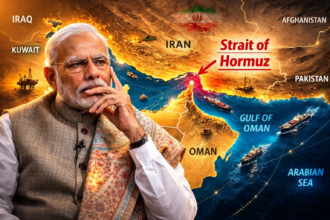
Rising tensions involving the United States and Iran are creating fresh economic risks for India, and the impact could extend far beyond just crude oil prices. The ongoing conflict in the Middle East has the potential to disrupt trade routes, energy supplies, and key imports that many Indian industries depend on. Since India has strong trade and supply connections with West Asian countries, any instability in the region can quickly ripple through the economy.
One of the biggest concerns is crude oil. India imports more than 85% of its oil needs, and a large portion of that comes from the Middle East. If the conflict disrupts shipments through the Strait of Hormuz — one of the world’s most important energy shipping routes – oil prices could rise sharply. Higher crude prices would increase fuel costs in India, raise transportation expenses, and contribute to higher inflation. A surge in oil prices can also widen India’s import bill and put pressure on the rupee.
Natural gas supplies are another major area of risk. India imports nearly 68% of its liquefied natural gas (LNG) from West Asia. LNG is used in fertiliser production, electricity generation, and city gas distribution networks that supply CNG for vehicles and gas for households. If shipments from the region are disrupted, it could affect power generation and fertiliser manufacturing, potentially raising costs across several sectors.
Liquefied petroleum gas (LPG), which millions of Indian households use as cooking fuel, is also closely linked to West Asian supply. Around 47% of India’s LPG imports come from the region. Any disruption in these supplies could lead to higher prices or shortages in the domestic market, directly affecting household budgets.
The agriculture sector could also feel the impact through fertiliser imports. India sources key inputs such as rock phosphate and phosphoric acid from West Asia. These materials are essential for fertiliser production. If imports become expensive or limited due to geopolitical disruptions, the government may have to increase fertiliser subsidies, or farmers could face higher input costs. In turn, this could push up food prices.
Another industry exposed to the crisis is the diamond and jewellery sector. India imports a significant share of rough diamonds from West Asian markets before processing them in hubs like Surat and exporting them globally. If shipments are disrupted, diamond processing units could face supply shortages, affecting exports and employment in the sector.
Manufacturing industries also rely on several industrial raw materials sourced from West Asia. These include polymer feedstocks such as polyethylene, which are used to produce plastics and packaging materials. Disruptions in these supplies could increase production costs for manufacturers and affect a wide range of industries.
The construction and infrastructure sectors may also face challenges. India imports materials such as limestone that are used in cement production. Any interruption in these supplies could raise costs for construction projects and infrastructure development.
In addition, metals and industrial materials like direct reduced iron and copper wire are imported from West Asian countries. These materials are used in manufacturing, power transmission, and renewable energy projects. Supply disruptions could slow industrial activity and increase project costs.
Overall, the Middle East crisis highlights how interconnected global supply chains have become. For India, the risks extend well beyond fuel prices. Energy supplies, fertilisers, industrial materials, and export sectors could all feel the effects if tensions escalate further. While the scale of the impact will depend on how the conflict develops, the situation underscores the importance of diversified supply sources and strong energy security strategies for the Indian economy.