




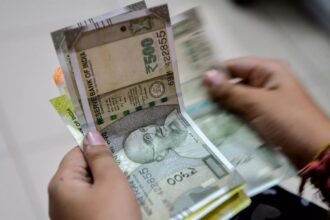
The Indian rupee has fallen to a record low against the US dollar, reflecting growing pressure on the country’s economy due to rising oil prices and geopolitical tensions in the Middle East. The rupee dropped about 0.6% to ₹92.3350 per dollar, surpassing the previous record low of ₹92.3025 recorded just days earlier.
Currency markets have reacted strongly to the ongoing conflict involving Iran, Israel, and the United States. The tensions have triggered sharp increases in global oil prices and created uncertainty in financial markets.
One of the biggest reasons behind the rupee’s decline is the surge in crude oil prices. Benchmark Brent Crude has jumped about 26% to around $117 per barrel as markets worry about supply disruptions from the Middle East.
This matters greatly for India because the country imports more than 85% of its crude oil needs. When oil prices rise sharply, India has to spend more money in US dollars to pay for these imports. As demand for dollars increases in the foreign exchange market, the rupee weakens against the American currency.
Energy price shocks have historically had a strong impact on the rupee. Higher oil prices increase India’s import bill, widen the trade deficit, and create pressure on the country’s currency.
Another factor contributing to the rupee’s fall is the shift in global investor sentiment. During geopolitical crises, investors often move their money into safer assets such as the US dollar. This trend, known as a “risk-off” move, strengthens the dollar while weakening currencies of emerging economies like India.
Financial markets around the world have already seen increased volatility because of the Middle East crisis. Stock markets have fluctuated, commodity prices have risen, and emerging-market currencies have come under pressure.
To manage the situation, the Reserve Bank of India (RBI) may step in to reduce excessive volatility in the currency market. The central bank can intervene by selling US dollars from its foreign exchange reserves and buying rupees to support the currency.
However, analysts believe that such interventions can only stabilize short-term fluctuations. The rupee’s longer-term direction will depend largely on global oil prices and how geopolitical developments unfold.
A weaker rupee can have several effects on India’s economy. One immediate impact is higher import costs. Since commodities such as oil are priced in dollars, a weaker rupee means India must pay more in local currency for the same imports.
This can also contribute to inflation. Rising fuel prices increase transportation costs, which in turn can push up the price of goods and services across the economy. Manufacturing costs may also rise, eventually affecting consumer prices.
The country’s trade balance could face additional pressure as well. A weaker rupee combined with high oil prices increases the overall import bill, which can widen the current account deficit.
Overall, the rupee’s record decline highlights how global geopolitical tensions and commodity price shocks can quickly affect emerging economies. As long as oil prices remain elevated and uncertainty persists in the Middle East, India’s currency and financial markets may continue to face pressure.