


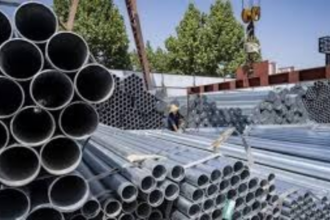
Shares of metal companies in India declined sharply after the sector dropped more than 3.5%, as a stronger US dollar and rising geopolitical tensions linked to the conflict between the United States and Iran weighed on global commodity prices and investor sentiment. The sell-off was led by aluminium producers, whose revenues are closely tied to international metal prices.
Several large metal companies recorded notable losses during the trading session. Shares of Hindalco Industries Ltd fell about 4.5%, while National Aluminium Company Ltd (NALCO) dropped nearly 5.5%. Steel producer Steel Authority of India Ltd (SAIL) was also among the major losers in the sector. The weakness in these stocks largely followed a decline in global aluminium prices, which directly affects the earnings outlook for producers.
The fall in metal stocks was primarily triggered by two major global developments. The first factor was the sharp appreciation of the US dollar, which climbed to a three-month high. Most commodities, including industrial metals, are priced globally in dollars. When the dollar strengthens, commodities become more expensive for buyers using other currencies. This tends to reduce demand expectations and often leads to lower commodity prices. As global aluminium prices declined, shares of Indian metal companies reacted negatively.
The second factor was escalating geopolitical tensions in the Middle East. The ongoing conflict involving the United States and Iran has increased uncertainty in global markets, disrupting supply chains and raising concerns about economic stability. During periods of geopolitical uncertainty, investors typically adopt a “risk-off” approach, reducing exposure to cyclical sectors like metals that are highly sensitive to global economic conditions.
Aluminium producers were particularly affected because aluminium prices dropped in international markets. Companies such as Hindalco Industries and National Aluminium Company derive a significant portion of their revenues from aluminium production, making their stock prices highly responsive to movements in global metal prices. When aluminium prices fall, the potential impact on margins and profitability becomes a concern for investors, which can trigger selling pressure in these stocks.
Interestingly, the latest decline also wiped out gains seen earlier in the week. Metal stocks had previously risen due to supply concerns emerging from the Middle East conflict, which had initially supported commodity prices. However, the strengthening of the US dollar and the subsequent fall in aluminium prices reversed that momentum, leading to a sharp correction in the sector.
The decline in metal stocks also came amid broader market volatility. Geopolitical tensions in the Middle East have been affecting multiple asset classes simultaneously, including commodities, equities, and currencies. Investors remain cautious as global markets react to uncertainty around energy prices, trade flows, and macroeconomic conditions.
Overall, the drop in metal stocks highlights how closely the sector is linked to global economic developments. Currency movements, geopolitical tensions, and commodity price fluctuations can all have a significant impact on companies operating in the metals and mining industry. As long as the dollar remains strong and geopolitical risks persist, metal stocks may continue to experience volatility in the near term.