




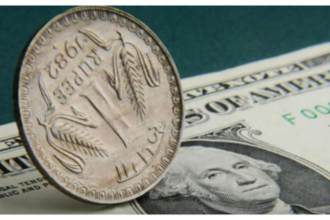
The Indian rupee strengthened sharply by around 130 paise to ₹93.59 against the US dollar, marking a significant single-session move in the currency market. The surge followed a directive by the Reserve Bank of India aimed at curbing speculative activity in the forex market.
The central bank introduced a cap on banks’ net open foreign exchange (FX) positions, limiting them to $100 million at the end of each trading day. Banks have been asked to fully comply with this rule by April 10, 2026. The move is designed to reduce excessive speculation and arbitrage in currency markets.
Prior to this intervention, the rupee had been under pressure, falling to record lows near ₹94.8 per dollar. One of the key contributors to this weakness was large arbitrage positions taken by banks between the onshore market in India and the offshore non-deliverable forward (NDF) market. These positions had reportedly grown to as much as $25–50 billion, amplifying volatility in the currency.
With the new cap in place, banks are now required to unwind these positions. This process involves selling dollars in the domestic market to reduce exposure. The increase in dollar supply has led to a sharp appreciation of the rupee, explaining the sudden jump in its value.
However, this adjustment comes with a cost. Bankers are expecting losses as they are forced to exit trades that were initiated at earlier price levels. Since the unwinding is happening under time pressure, many positions may be closed at unfavourable prices, leading to mark-to-market losses. The rush to exit trades may also widen spreads, further increasing the impact on profitability.
The short compliance deadline adds to the challenge, raising the risk of disorderly adjustments in the market. As a result, while the rupee benefits from the increased dollar supply, banks face financial strain in the near term.
This creates a clear trade-off. The policy supports currency stability by reducing speculative pressure, but it impacts bank earnings due to forced unwinding of positions. Market volatility is also expected to remain elevated in the short term.
Despite the rupee’s sharp recovery, the sustainability of this strength remains uncertain. The appreciation is largely driven by technical factors – specifically, the unwinding of positions, rather than improvements in underlying fundamentals. External pressures such as elevated oil prices, geopolitical tensions, and capital outflows continue to pose risks.
Overall, the move reflects a defensive strategy by the RBI to stabilize the currency and bring discipline to forex markets. While it has delivered an immediate boost to the rupee, it has also highlighted the potential costs of regulatory intervention for market participants.