



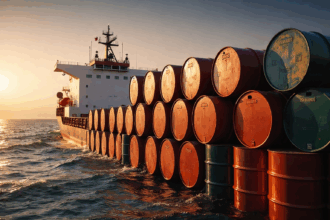
Global oil prices continued to move higher as rising tensions in the Middle East increased fears of possible supply disruptions. Investors became cautious after fresh incidents involving the United States and Iran raised concerns about the safety of key oil shipping routes. Because the Middle East plays a very important role in global energy supply, even small signs of conflict can push oil prices upward.
On February 4, 2026, Brent crude futures rose around 0.8% to trade near $67.89 per barrel, while US West Texas Intermediate (WTI) crude climbed about 1% to around $63.84 per barrel. These gains came on top of a strong rise seen in the previous session, when both oil benchmarks had already increased by nearly 2%. The steady climb shows that markets are adding a “risk premium” to oil prices due to growing geopolitical uncertainty.
The main trigger behind the rally was renewed tension between the US and Iran. According to reports, the US military shot down an Iranian drone that reportedly moved close to the USS Abraham Lincoln aircraft carrier in the Arabian Sea. At the same time, Iranian gunboats were seen approaching a US-flagged oil tanker near the Strait of Hormuz. These incidents raised fears that the situation could escalate and affect oil transportation in the region.
The Strait of Hormuz is one of the most critical oil transit routes in the world. A large share of crude oil from major producers such as Saudi Arabia, Iran, Iraq, Kuwait and the UAE passes through this narrow waterway. Any threat to shipping in this area can quickly disrupt global supply. Even if actual supply is not stopped, the fear of disruption is often enough to drive prices higher, as traders prefer to stay cautious.
Apart from geopolitical tensions, oil prices also found support from supply data in the United States. Industry figures showed that US crude oil inventories dropped sharply by more than 11 million barrels. This was a surprise because many analysts had expected inventories to rise. A large fall in stock levels suggests tighter supply conditions, which naturally supports higher oil prices.
There were also some positive demand-related factors in the background. Recent trade developments between the US and India raised hopes of stronger global economic activity and energy demand. If economic growth improves, oil consumption usually rises as well. In addition, ongoing conflict in Ukraine continues to support prices, as it keeps uncertainty around Russian oil exports and long-term sanctions alive.
Market experts believe that oil prices may remain volatile in the near term. While there is no confirmed disruption to oil supply yet, the combination of geopolitical risk, lower inventories and demand optimism is keeping prices firm. Analysts expect WTI crude to hover around the $65 per barrel level unless tensions ease or new supply enters the market.
In simple terms, oil prices are rising because markets are worried about what could go wrong. When important regions like the Middle East become unstable, energy markets react quickly. Until there is clarity on geopolitical developments, oil is likely to remain sensitive to headlines and global events.