



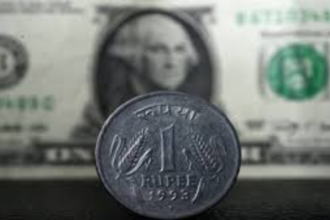
The Indian rupee has fallen to a historic low against the US dollar, crossing the ₹93 mark for the first time. During the latest trading session, the currency weakened to ₹93.12 per dollar, surpassing its previous record low of ₹92.63 reached only a few days earlier. At one point during the day, the rupee slipped even further to around ₹93.24 per dollar, highlighting the continued pressure on the Indian currency in global markets.
This sharp decline reflects a combination of global and domestic factors that have increased demand for the US dollar while weakening emerging market currencies. One of the biggest triggers behind the rupee’s fall has been the ongoing geopolitical conflict in the Middle East, particularly tensions involving Iran. The conflict has raised serious concerns about disruptions to global oil supplies, which has pushed crude oil prices sharply higher.
Global crude oil prices surged close to $120 per barrel at one stage as markets reacted to attacks on key energy infrastructure in the Gulf region and fears about the safety of shipping routes through the Strait of Hormuz. This development is particularly important for India because the country imports a large portion of the crude oil it consumes. When oil prices rise sharply, India needs to spend more dollars to pay for its energy imports.
As the demand for dollars increases to pay for oil imports, the rupee tends to weaken against the US currency. This mechanism is one of the primary reasons behind the recent depreciation of the Indian currency. Higher oil prices also increase the country’s overall import bill and can widen the current account deficit, which further pressures the rupee.
Another factor contributing to the currency’s decline is the significant outflow of foreign investments from Indian financial markets. Foreign institutional investors have reportedly pulled out more than $8 billion from Indian equities during March. This marks the largest monthly outflow since January 2025. When foreign investors sell their holdings in Indian stocks or bonds, they convert the proceeds from rupees into US dollars before transferring funds abroad. This increases demand for dollars in the foreign exchange market, pushing the rupee lower.
Global financial conditions have also played a role in the rupee’s weakness. The US dollar has strengthened against many global currencies as investors move money toward safer assets during periods of geopolitical uncertainty. A stronger dollar usually puts additional pressure on emerging market currencies such as the rupee.
Economists warn that sustained high oil prices could have wider economic implications for India. One major concern is inflation. When energy prices rise, transportation and production costs across industries increase, which eventually pushes up the prices of goods and services. Analysts estimate that every $10 increase in crude oil prices could raise India’s inflation rate by around 0.5 percentage points.
Some economists have already revised their inflation forecasts upward. Inflation for FY27 is now expected to reach around 4.5%, compared with earlier estimates of about 3.8%. Despite these concerns, many analysts still believe that India’s economic growth may remain relatively strong, with projections suggesting the economy could expand by around 7% in FY27.
Overall, the rupee’s fall to a record low reflects the combined impact of rising global oil prices, geopolitical tensions, foreign investment outflows, and a stronger US dollar. If these pressures continue, the Indian currency may remain volatile in the near term.